The Fox in the Forest is the best two-player trick-taking game: Renegade Game Studios publishes it for exactly 2 players at 30 minutes, and its greedy-scoring rule stops the stronger player from simply hoovering up every trick. Fox in the Forest Duet is the cooperative version, and Allplay's Sail is the one with communication limits.
We earn a commission when you buy through links on this page, at no extra cost to you. It does not change which games we recommend or what we say about them. How this site is funded.
Trick-taking is the mechanism almost everyone already knows -- follow suit, highest card wins, repeat -- and it is also the mechanism that works worst with two people by default. Whist, hearts, spades and bridge all assume a table of three or four. Take two of those players away and the game stops functioning.
The fix is not a house rule. It is a small number of games designed from the start for exactly two hands, where the deck size, the scoring and the information you are allowed to share were all set for two people and nobody else.
There are three of them on this site, and this page ranks all three. That is a short list by design: we would rather publish three games we can verify to a publisher's own page than pad the count with four-player games carrying a two-player variant buried in the back of the rulebook.
Quick picks
#
Game
Players
Time
Price
1
The Fox in the Forest
A trick-taking game for two that actually works, which almost no trick-taker manages.
Player counts and playing times come from each publisher, cited on that game's review page. Tap a row to jump to the full write-up.
01
What we judged on
Trick-taking at two has one structural problem and everything here is judged against it. With four players, the uncertainty comes from three other hands you cannot see. With two, there is one hidden hand and a much smaller deck, so a strong player can often count the cards and the game collapses into arithmetic.
Does the scoring stop a runaway? The best two-player trick-takers punish taking too many tricks, not too few. That single inversion is what keeps a match close between an experienced player and a new one.
Is the player count publisher-stated as 2? All three picks are, which is rarer than it sounds in this genre and is the reason the list is three long rather than eight.
How long is a full game? All three run about twenty to thirty minutes by their publishers' figures, which is the right length for a mechanism this repetitive.
Footprint. A trick is two cards in the middle of the table. This is the smallest-footprint branch of card gaming, and we note where a game adds a board that spoils that.
02
Who each pick is for
One line each.
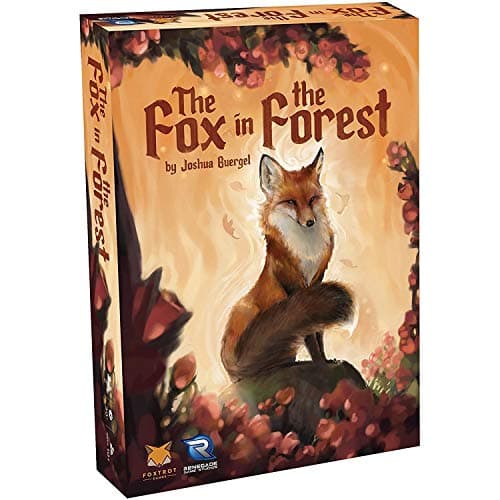
The Fox in the Forest -- best for two people who want to compete without the evening turning sour. Renegade publishes it for exactly 2 players at 30 minutes, ages 10+, and winning too many tricks scores you nothing at all, so the better player cannot simply bulldoze.
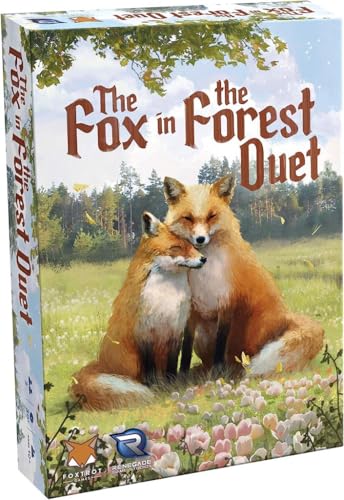
Fox in the Forest Duet -- best for the pair who have established that competing against each other is not fun. Renegade publishes it as a cooperative trick-taking game for 2 players at 30 minutes: same three suits, same length, opposite relationship.
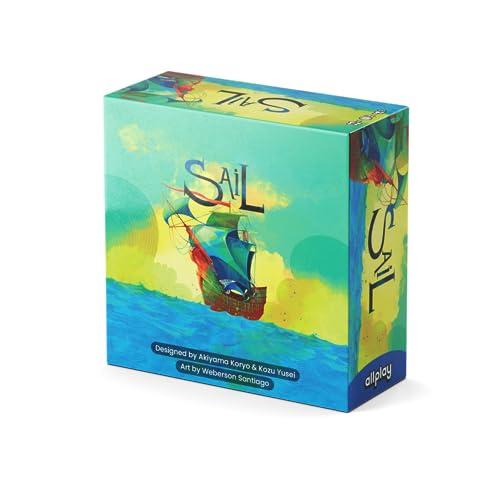
Sail -- best for the pair who want the cooperative version to be harder. Allplay publishes it for 2 players at 20 minutes, ages 11+, as a co-op trick-taker with explicit communication limits, which is the constraint Duet's own publisher page does not describe for its game.
03
Why most trick-taking games do not work at two
It is worth being specific, because the standard advice -- just play a two-handed variant -- is how people end up disliking the whole mechanism.
A trick-taking game is a race to read the other hands. At four players, you are reading three unknowns across thirteen tricks and the picture resolves slowly. At two, there is a single unknown hand and a deck that is often cut down to make the game work at all, so by the fourth or fifth trick a player who is paying attention knows roughly what the other holds. Everything after that is execution.
Games designed for two solve this with structure rather than with a bigger deck. The Fox in the Forest hands you decree cards that change the rules mid-hand and a scoring curve that makes a dominant hand worthless. Sail replaces the opponent with a shared enemy and puts a hard limit on what you are allowed to tell your partner. In both cases the tension comes from something other than hidden cards, which is exactly what two-player trick-taking needs.
That is also why a short deck is a design decision here rather than a cost saving. If the deck were larger, counting it would stop working and the games would be easier -- but they would also stop being about reading one specific person across the table, which is the thing two-player trick-taking is uniquely good at and the reason these three keep getting played.
04
Competitive or cooperative: pick this before you pick a game
Two of the three games here are cooperative, which is unusual for the genre and genuinely useful for a household of two.
If the two of you enjoy playing against each other, buy the original Fox in the Forest. It is the cheapest game on this page, it teaches in about five minutes, and the greedy-scoring rule means a bad hand is often easier to play well than a strong one.
If competing is the part that does not work in your house, the choice is between Duet and Sail. Duet is the gentler of the two and shares its parent game's exact specifications -- 2 players, 30 minutes, ages 10+. Sail is tighter: twenty minutes, a scenario book, and communication rules that the publisher spells out rather than leaves to table etiquette.
What we will not do is tell you one of them is objectively better than the other. They are the same length and the same price bracket and they fail for opposite people, which is why this page gives you the rule instead of a verdict.
One thing the cooperative pair do share is that they are harder than they look. A competitive trick-taker forgives a loose play, because the other person still has to beat you. A cooperative one does not: a card thrown away early is the card the two of you needed four tricks later, and the game will tell you so. Pairs who bounce off co-ops usually bounce off that rather than off the theme.
05
Why this list is three games long
Because three is how many trick-taking games we cover whose publishers state a player count of exactly 2.
There are good trick-takers that advertise a two-player variant, and some of them are excellent. They are not here for one reason: this site stores the player count a publisher actually prints, and a game whose own page says 3 to 5 does not get listed as a two-player game on the strength of a variant we cannot read. When one of those publisher pages becomes reachable and states a two-player mode, the game gets added and this page gets longer.
A short honest list is the whole product here. A list of eight would mean five of them were adapted four-player games, which is the exact thing that makes people decide they do not like trick-taking at two.
06
What to check if you buy a trick-taker that is not on this list
You will find others, and some will be good. Four checks, in the order we would apply them.
Read the player count on the publisher's own page, not the retailer listing. Retail copy routinely rounds a two-player variant up into the headline count, and the publisher's page is the one that has to be accurate. If the publisher says 3 to 5, treat the two-player mode as a bonus rather than the product.
Find out whether the two-player mode uses a dummy hand. Many two-handed variants deal a third hand nobody owns, which is a reasonable fix but it changes the game into something closer to solitaire with an opponent. Not a disqualifier, but know before you buy.
Check what the scoring punishes. The single best predictor of whether a trick-taker survives at two is whether it is possible to take too many tricks. Where winning everything is simply the best outcome, the stronger player wins every time and the game stops being worth playing after a month.
Check how much of the deck is in play. A two-player game that uses a full deck minus two hands leaves most of the cards unseen, which is usually a tell that the design is a four-player game wearing a smaller hat. The games here use short, purpose-built decks.
07
What we did instead of playing these
We have not played these games. We took the player count, playing time, age rating and mechanism description from Renegade Game Studios and Allplay -- the publishers' own product pages, both reachable and both quoted in the sources below -- and ranked on the criteria above.
The buy buttons carry live pricing with the date it was checked. There are no prices in this prose and no scores out of ten.
A trick-taking game for two that actually works, which almost no trick-taker manages.
A two-player-only trick-taking card game. Winning too many tricks makes you greedy and scores nothing, so the game is about landing in a narrow band -- and odd-numbered cards each break a rule.
Players
2
Playing time
30 minutes
Age
10+
Designer
Joshua Buergel
Publisher
Foxtrot Games / Renegade Game Studios
Published
2017
Who should skip it
Skip it if neither of you has played a trick-taking game before. The scoring rewards losing on purpose, and that lands badly cold.
A trick-taking game where the two of you are on the same side, which is not supposed to be possible.
A cooperative trick-taking card game for exactly two. The three suits are Doves, Roses and Stars, and rather than scoring tricks against each other you spend them moving along a forest board, collecting gems and trying to stay on the path. A shared team tracker replaces the two separate scores the original game keeps.
Players
2
Playing time
30 minutes
Age
10+
Publisher
Renegade Game Studios
Who should skip it
Skip it if what you want is to beat the person across the table. There is no winner here -- you both clear the forest or you both lose to it.
The shortest cooperative game we cover, and the only one where the thing you are fighting is on a timer you can see.
A two-player-only cooperative trick-taking game. You and your partner play cards into tricks, but you are not trying to win them -- the icons on the cards steer a ship across an ocean board, the trick's winner decides which way it turns, and a Kraken closes in behind you. You get five hands to reach the end, and you cannot tell each other what you are holding.
Players
2
Playing time
20 minutes
Age
11+
Publisher
Allplay
Who should skip it
Skip it if you want to talk your way through a problem together. The communication limit is the game, and twenty minutes of guessing at your partner's hand is the whole experience rather than a phase of it.
+−What is the best trick-taking game for 2 players?
The Fox in the Forest. Renegade Game Studios publishes it for exactly 2 players at 30 minutes, ages 10+, and the scoring punishes winning too many tricks, which keeps a match close when one player is much more experienced than the other.
+−Can you play trick-taking card games with two people?
Yes, but not most of them. Whist, hearts and spades assume three or more hands and lose their tension at two. Buy a game whose publisher states a player count of 2 -- the three on this page all do -- rather than a two-handed variant of a four-player game.
+−Is there a cooperative trick-taking game for two players?
Two of them here. Fox in the Forest Duet is published by Renegade as a cooperative trick-taking game for 2 players at 30 minutes, and Allplay's Sail is a 20-minute co-op trick-taker for 2 with stated communication limits.
+−What is the difference between Fox in the Forest and Fox in the Forest Duet?
The relationship, and almost nothing else. Renegade publishes both for exactly 2 players at 30 minutes, ages 10+. The original is a competitive duel; Duet puts you on the same side moving along a shared forest board. We compare them directly on this site.
+−What is the smallest trick-taking game to travel with?
The Fox in the Forest. A trick is two cards in the middle of the table, so the playing footprint is a few square inches and the box is a deck plus tokens. Sail adds three small boards, which is still tiny but no longer pocket-sized.
+−Are trick-taking games good for beginners?
Unusually good. The core loop -- follow suit, high card wins -- is already familiar to anyone who has played cards at all, so the teach is about five minutes. What takes practice is the scoring twist each of these games adds on top.