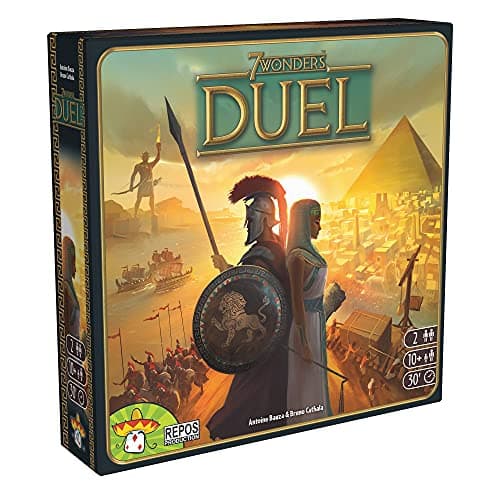
The best competitive two-player board games are 7 Wonders Duel, Jaipur, Hive, Onitama, Watergate and Santorini. Four of the six are stated by their publishers as exactly two players. 7 Wonders Duel is the strongest all-rounder at 30 minutes; Onitama is the fastest to learn at 15.
We earn a commission when you buy through links on this page, at no extra cost to you. It does not change which games we recommend or what we say about them. How this site is funded.
A two-player competitive game is the purest thing in the hobby. There is no kingmaking, no politics, no one else to gang up on. Whatever happens is between the two of you, and the design has nowhere to hide -- a mediocre competitive game for two is obviously mediocre by the fourth play.
That purity is also the risk. In a four-player game, losing is a shrug. At two, losing is losing to a specific person who is sitting across from you and will be there tomorrow. So the useful question is not which of these is the deepest game. It is which kind of losing the two of you can enjoy.
The list below spans three answers to that. Abstract games where the loss is entirely your own fault and everyone can see it. Card games where the deck softens the blow. And asymmetric games where you were playing different jobs and comparing them directly makes no sense.
Direct conflict versus indirect conflict
The other axis worth checking before you buy, and the one that causes the most returned games. In a directly confrontational game you attack the other person's position -- taking their piece, blocking their route, forcing a discard. In an indirect game you compete for shared resources but never touch each other's board.
Almost every argument we have seen described about a two-player game traces back to a mismatch here. One person bought a game they read as a tight puzzle; the other experienced it as being repeatedly targeted. Hive and Onitama are directly confrontational by design -- capturing and surrounding is the entire game. Jaipur is indirect: you are racing for the same tokens, but you never reach across the table. 7 Wonders Duel is both, and the military track is exactly where couples discover which one of them minds.
03First player advantage, and whether to care
In a symmetric perfect-information game, going first is worth something real. Serious players handle this by playing an even number of games and alternating who starts, which is the whole fix and takes no effort. Play two, swap, and the advantage cancels.
It matters more than you would expect for household peace, because an unacknowledged structural advantage gets read as a skill gap. If one of you keeps winning as first player and losing as second, that is the game talking, not the two of you. We wrote a whole guide on how to check.
04How long these actually take at the table
Publisher playing times are for people who already know the game. Every one of these will run substantially longer the first two or three times, and the gap is worst on the games with the most cards: 7 Wonders Duel's stated 30 minutes is realistic once you know what the symbols mean and is not realistic on game one.
The abstracts are the honest ones here. Onitama at a stated 15 minutes really is about 15 minutes, because the rules fit on one card and there is nothing to look up. If your evenings are short and unpredictable, that reliability is worth more than depth.
The picks in full
2 players · 30 minutes · ages 10+
The strongest all-round two-player game in print, and the one most couples settle on.
A two-player-only card drafting game where each side builds a civilization across three ages. Three ways to win -- civilian points, military supremacy and scientific dominance -- run at once, so every card you take is also a card denied.
- 2
- 30 minutes
- 10+
- Antoine Bauza and Bruno Cathala
- Repos Production
- 2015
Skip it if you want a relaxing evening. Three win conditions run at once, so you are always watching what the other person is about to do.
Specs from 7 Wonders Duel official site (Repos Production).
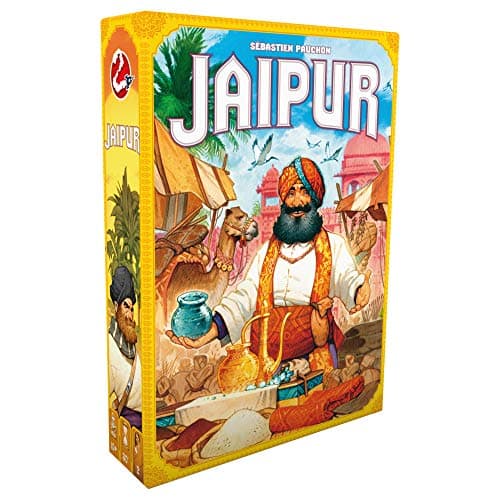
2 players · 30 minutes · ages 10+
The best first two-player card game there is: five minutes to teach, and it keeps giving for years.
A two-player-only trading card game. You collect and sell goods in sets, racing the other trader for bonus tokens that shrink as they are taken. Best of three rounds decides it.
- 2
- 30 minutes
- 10+
- Sebastien Pauchon
- Asmodee / GameWorks
- 2009
Skip it if you want a board on the table. This is cards and tokens, and it looks slight next to a game with a map.
Specs from Jaipur - Space Cowboys (publisher: players, time, age, designer, contents), Jaipur (card game) - Wikipedia infobox (2009 first edition, publishers).
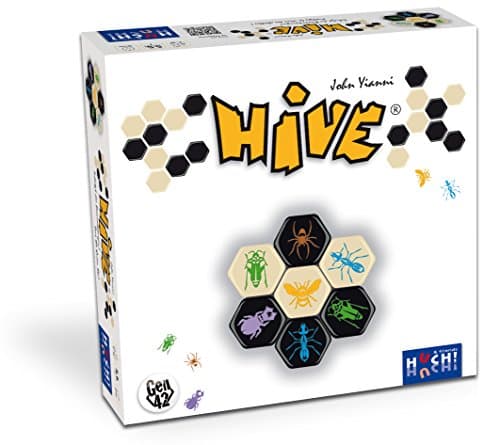
2 players · 20 minutes · ages 9 and up
Chess without a board, in tactile tiles, and it survives the hundredth game better than most.
A two-player-only abstract strategy game with no board: 22 tactile tiles that build the playing surface as you place them. Surround the opposing queen bee to win.
- 2
- 20 minutes
- 9 and up
- Gen42 Games
- 210mm x 210mm x 50mm
Skip it if abstract games leave you cold. There is no theme here to carry you through a bad position.
Specs from Hive - Gen42 Games (publisher).
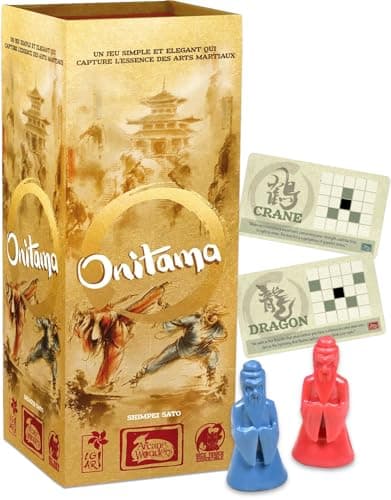
2 players · 15 minutes · ages 14+
Perfect information, sixteen move cards, and a rules explanation that takes under two minutes.
A two-player-only abstract on a 5x5 grid. Five move cards are in play at once and they physically pass between the two of you, so arming yourself always arms the opponent.
- 2
- 15 minutes
- 14+
- Arcane Wonders
Skip it if you dislike losing to a mistake you can see clearly in hindsight. Nothing is hidden, so every loss is yours.
Specs from Onitama - Arcane Wonders (publisher).
No image
2 players · 30-60 minutes · ages 12+
Asymmetric, historical, and finished inside an hour -- the shortest route into serious card-driven games for two.
A two-player-only asymmetric card-driven game. One side is the Nixon administration, the other the Washington Post, and every card is both an action for you and a resource for the opponent.
- 2
- 30-60 minutes
- 12+
- Matthias Cramer
- Capstone Games
- 2019
Skip it if you both want the same experience. The two sides play very differently and one of you will prefer a side.
Specs from Watergate (board game) - Wikipedia infobox.
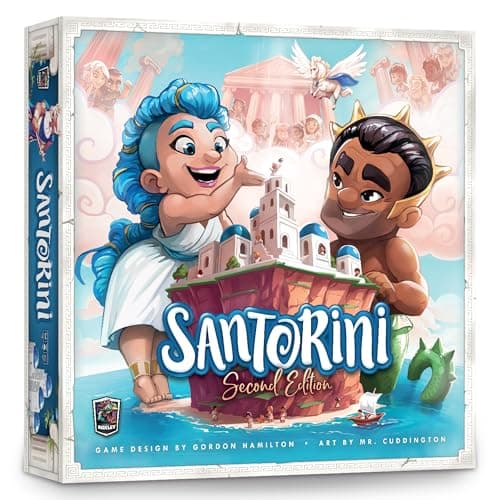
2-4 players · 20 minutes · ages 8+
The best-looking game here, and the god powers turn a simple abstract into dozens of different games.
A supports-more abstract that plays well at two. Move a worker, then build. First to step onto a third level wins -- and each side draws a god power that bends one rule.
- 2-4
- 20 minutes
- 8+
- Gord Hamilton
- Roxley Games
Skip it if you want your two-player game to be two-player only. It supports up to four, and the base rules are thin without the god powers.
Specs from Santorini - Roxley Games (publisher).