Going first is a genuine advantage in symmetric two-player games, particularly luck-free abstracts. The fix is to play an even number of games and alternate who starts. Asymmetric games such as Watergate sidestep the question because the two sides are not comparable.
We earn a commission when you buy through links on this page, at no extra cost to you. It does not change which games we recommend or what we say about them. How this site is funded.
Almost every two-player game gives the first player something. In most it is small enough to ignore. In a few it is large enough that ignoring it distorts how the two of you understand your own results.
The reason to care is not competitive integrity. It is that an unacknowledged structural advantage gets read as a skill gap, and skill gaps have social consequences that structural advantages do not.
01
Where the advantage is largest
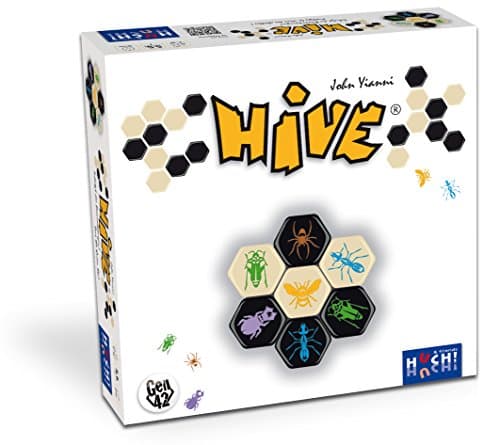
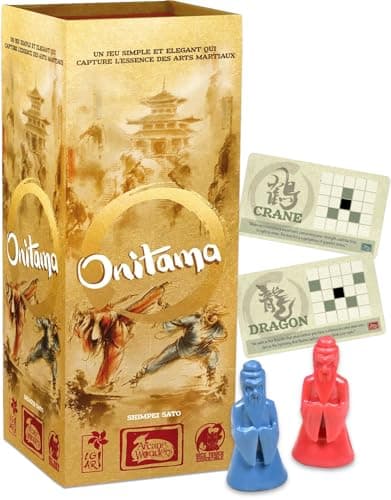
Symmetric perfect-information abstracts -- Hive, Onitama. No luck means nothing washes the advantage out, and the first move is a genuine tempo edge. This is the category where designers add explicit balancing rules.
Racing games where a threshold ends the game. If reaching a target ends things immediately, the player who acts first reaches it first, all else equal.
Games with a shared drafting pool -- 7 Wonders Duel. The first player picks from an untouched layout, though the pyramid structure and the wonder selection mechanism deliberately push back against this.
02
Where it barely exists
Card games with a significant draw -- Jaipur, Lost Cities, The Fox in the Forest -- swamp the first-move edge in variance. It is presumably still there, and it is not measurable across the number of games a household will ever play.
Cooperative games have no first player advantage at all in the competitive sense; there is no opponent to be advantaged against.
Asymmetric games remove the question rather than answering it. In Watergate the two sides have different tools and different win conditions, so going first is not a comparable quantity in the first place.
03
How to test it in your own house
1Track two columns for one month: who went first, and who won. Nothing else.
2After twenty games, split the results by starting player rather than by person.
3If one person wins substantially more often as first player and roughly evens out as second, that is the game talking, not a skill difference.
4If one person wins regardless of who starts, first player advantage is not your issue, and a game with more luck in it will do more for your evenings than any seating rule.
04
The fix, which costs nothing
Play an even number of games and alternate who starts. That is the whole solution, and it is what serious players of these games do without discussing it.
For games short enough to play twice in a sitting -- Onitama at 15 minutes, Hive at 20, Jaipur's three rounds -- this is effortless. Treat the pair of games as one result and the advantage cancels exactly.
For longer games, alternate across sessions and keep the running record by starting position rather than by person. It removes the ambiguity, and it removes the quiet resentment that ambiguity feeds.
05
The reason this is worth twenty minutes of attention
Two people playing the same game a hundred times will develop a story about who is better at it. That story affects which games get suggested, who teaches what, and eventually whether the box comes off the shelf at all.
If part of that record is a structural artifact of who happened to go first, it is worth knowing. It costs one column in a notes app, and games are supposed to be fun.
What we would buy
Picks drawn from the games covered on this site, chosen against the criteria above.
We earn a commission when you buy through links on this page, at no extra cost to you. It does not change which games we recommend or what we say about them. How this site is funded.
Chess without a board, in tactile tiles, and it survives the hundredth game better than most.
A two-player-only abstract strategy game with no board: 22 tactile tiles that build the playing surface as you place them. Surround the opposing queen bee to win.
Players
2
Playing time
20 minutes
Age
9 and up
Publisher
Gen42 Games
Box size
210mm x 210mm x 50mm
Who should skip it
Skip it if abstract games leave you cold. There is no theme here to carry you through a bad position.
Perfect information, sixteen move cards, and a rules explanation that takes under two minutes.
A two-player-only abstract on a 5x5 grid. Five move cards are in play at once and they physically pass between the two of you, so arming yourself always arms the opponent.
Players
2
Playing time
15 minutes
Age
14+
Publisher
Arcane Wonders
Who should skip it
Skip it if you dislike losing to a mistake you can see clearly in hindsight. Nothing is hidden, so every loss is yours.
Asymmetric, historical, and finished inside an hour -- the shortest route into serious card-driven games for two.
A two-player-only asymmetric card-driven game. One side is the Nixon administration, the other the Washington Post, and every card is both an action for you and a resource for the opponent.
Players
2
Playing time
30-60 minutes
Age
12+
Designer
Matthias Cramer
Publisher
Capstone Games
Published
2019
Who should skip it
Skip it if you both want the same experience. The two sides play very differently and one of you will prefer a side.
+−Does going first matter in two-player board games?
Yes in symmetric luck-free games such as Hive and Onitama, where nothing washes the tempo edge out. In card games with a significant draw it is swamped by variance.
+−How do you balance first player advantage?
Play an even number of games and alternate who starts, treating the pair as one result. For short games like Onitama and Hive this costs nothing.
+−Do asymmetric games have a first player advantage?
The question does not really apply. In a game like Watergate the two sides have different tools and win conditions, so there is no symmetric quantity to be advantaged in.
+−How can we tell whether it is first player advantage or a skill gap?
Track who started and who won for twenty games, then split results by starting player. If one person wins as first and evens out as second, it is the game; if they win regardless, it is not.