Buy a single game with a rules explanation under five minutes and real depth: Jaipur is the safest first purchase for two people, published for exactly 2 players at 30 minutes. Play it eight to ten times before buying anything else.
We earn a commission when you buy through links on this page, at no extra cost to you. It does not change which games we recommend or what we say about them. How this site is funded.
The first purchase is the one most likely to go wrong, and it usually goes wrong in the same two ways: buying three games at once, or buying something impressive rather than something teachable.
This guide is about avoiding both.
01
Buy one game, not a starter set
Three light games arriving together feels efficient and is not. A game needs roughly eight to ten plays before you know whether you actually like it -- before that you are still learning it, and everything is interesting because everything is new.
With three boxes, none of them gets ten plays. You end up with three shallow impressions, no game you know cold, and no real information about what the two of you enjoy. With one box, you get all of that, and the second purchase is dramatically better aimed.
The money argument points the same way. One game you play forty times is better value than three you play twelve times between them.
02
What to actually look for
A rules explanation under five minutes. This is the highest-weighted criterion and it is not close. The first explanation is when the other person decides whether this is fun or homework.
A stated player count of exactly 2. A game built for your situation spent all its design budget on your situation. Jaipur, Patchwork, Lost Cities and Onitama all qualify; plenty of recommended two-player games do not.
Thirty minutes or less. Long games do not get played on weeknights, and a first game that only comes out at weekends takes months to reach ten plays.
One core decision that stays hard. Not lots of rules -- one decision you keep getting wrong. Jaipur's sell-now-or-hold is the model example.
03
The shortlist, in order
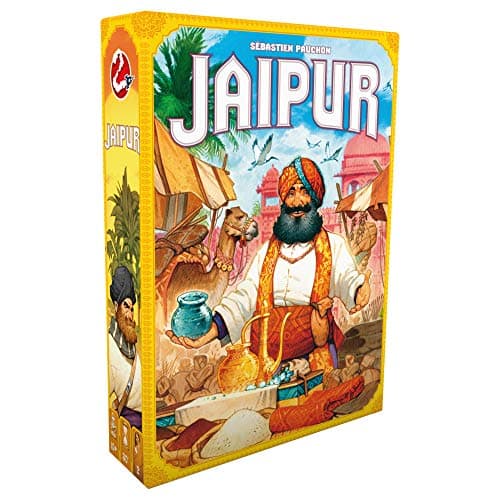
Jaipur is the recommendation if you want one answer. Two players exactly, 30 minutes, teaches in five, no direct attacking so it works in any household, and deep enough that people with hundreds of games still keep it.
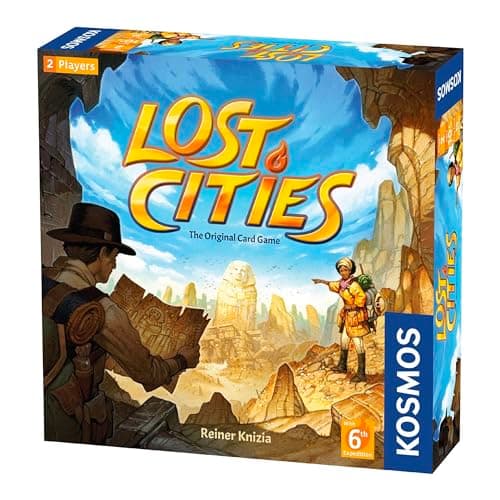
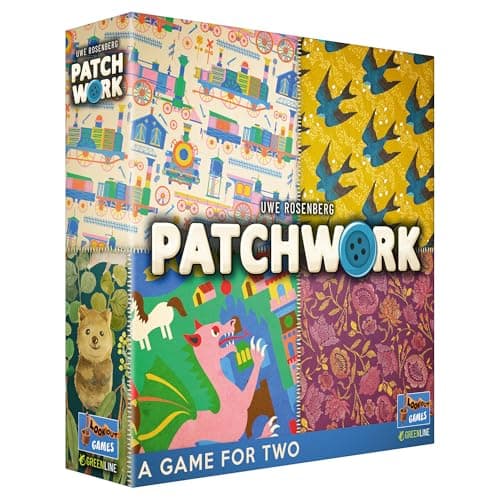
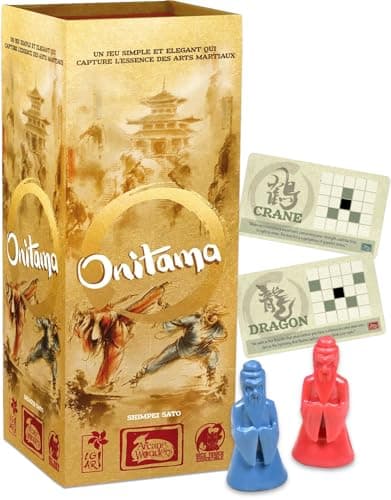
Lost Cities if you want the smallest footprint and do not mind more luck -- it plays anywhere and gives the weaker player real wins. Patchwork if one of you is unsure about competitive games at all, since nothing bad happens to you because of someone else's choice. Onitama if you both already know you like pure strategy and want something with no luck.
Codenames: Duet is the pick if you would rather cooperate than compete, though note the publisher lists it as 2+ rather than exactly two.
04
What not to buy first
Not 7 Wonders Duel. It is the best game on this site and the wrong first purchase, because its card symbols are a small visual language and the first game involves a rulebook on the table. Buy it second, after the two of you have decided board games are a thing you do.
Not a campaign game. Those require a run of evenings in sequence and a place to store the game, and the abandonment rate is high even among people who already play a lot.
Not something because it looks impressive on a shelf. Santorini is genuinely beautiful and it is a fine purchase, but table presence should be a tiebreaker rather than a reason.
05
After ten plays
You will know three things you cannot know now: whether you prefer competing or cooperating, whether luck in a game is a relief or an irritation, and how long a game your evenings actually support.
Those three answers point straight at the second purchase, and they are worth far more than any list. Come back to our hub pages then -- the co-op, head-to-head, date night, beginner and travel sections each answer a different one of those questions.
What we would buy
Picks drawn from the games covered on this site, chosen against the criteria above.
We earn a commission when you buy through links on this page, at no extra cost to you. It does not change which games we recommend or what we say about them. How this site is funded.
The best first two-player card game there is: five minutes to teach, and it keeps giving for years.
A two-player-only trading card game. You collect and sell goods in sets, racing the other trader for bonus tokens that shrink as they are taken. Best of three rounds decides it.
Players
2
Playing time
30 minutes
Age
10+
Designer
Sebastien Pauchon
Publisher
Asmodee / GameWorks
Published
2009
Who should skip it
Skip it if you want a board on the table. This is cards and tokens, and it looks slight next to a game with a map.
Built for two2 players · 30 minutes · ages 10 and up
Old enough to vote and still the cleanest press-your-luck card game for two.
A two-player-only card game about mounting expeditions. Every card you play must be higher than the last on that color, so committing early is how you score and also how you go negative.
Players
2
Playing time
30 minutes
Age
10 and up
Designer
Reiner Knizia
Publisher
Kosmos / Rio Grande Games
Published
1999
Who should skip it
Skip it if a run of bad draws will sour the evening. The cards decide more here than in anything else we recommend.
The gentlest good game on this site. Two quilts, no attacking, and a surprisingly sharp puzzle underneath.
A two-player-only tile-laying game. You buy fabric patches on a shared time track and fit them onto a personal 9x9 quilt board, paying with buttons and with time.
Players
2
Playing time
about 30 minutes
Age
8+
Designer
Uwe Rosenberg
Publisher
Lookout Games
Published
2014
Who should skip it
Skip it if you want to interact. You are mostly solving your own board, and the only contact is who takes which patch first.
Perfect information, sixteen move cards, and a rules explanation that takes under two minutes.
A two-player-only abstract on a 5x5 grid. Five move cards are in play at once and they physically pass between the two of you, so arming yourself always arms the opponent.
Players
2
Playing time
15 minutes
Age
14+
Publisher
Arcane Wonders
Who should skip it
Skip it if you dislike losing to a mistake you can see clearly in hindsight. Nothing is hidden, so every loss is yours.
+−What is the best first board game for two players?
Jaipur. It is published for exactly 2 players at 30 minutes, teaches in about five minutes, has no direct attacking, and stays interesting for years.
+−Should we buy several games at once?
No. A game needs eight to ten plays before you know whether you like it, and three boxes at once guarantees none of them gets that.
+−Is 7 Wonders Duel a good first game?
It is an excellent game and a poor first purchase. Its card symbols take a couple of games to read fluently, which means the first session involves the rulebook.
+−How do I know when to buy a second game?
After about ten plays of the first. By then you will know whether you prefer competing or cooperating, whether luck helps or irritates, and how long your evenings really are.