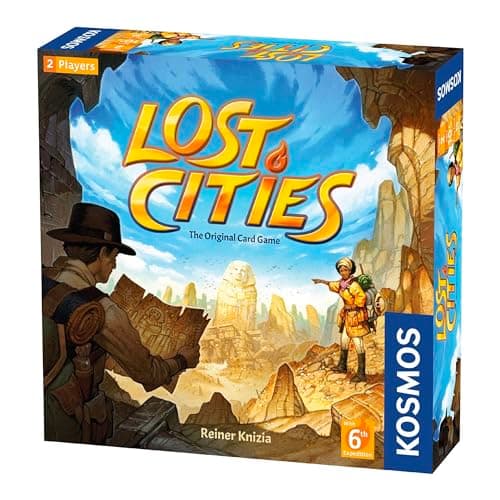
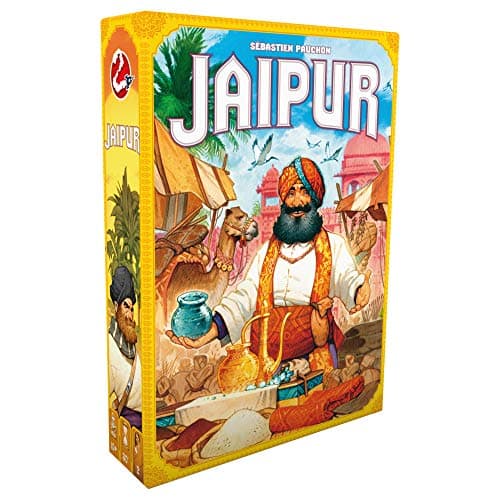
Buy Jaipur first. Both are two-player-only 30-minute card games, but Jaipur teaches faster and has less swing. Buy Lost Cities instead if you want the sharper, riskier game or the smaller footprint -- it is cards only, published 1999.
We earn a commission when you buy through links on this page, at no extra cost to you. It does not change which games we recommend or what we say about them. How this site is funded.
If you asked ten people for the best two-player card game you would get these two names more than any others. They are both excellent, both genuinely two-player only, and both run 30 minutes.
The difference is how much the deck is allowed to decide.
How much the deck decides
Lost Cities is the riskier game. Committing to an expedition costs 20 points before it scores anything, and whether the cards for it appear is not up to you. A round can be lost to the shuffle.
Jaipur softens this. You are drawing from a visible market rather than blind, so you can see what is available and plan around it, and the best-of-three structure means a bad round is a setback rather than a defeat. Skill shows through faster.
Neither is objectively better. Lost Cities' swing is what makes its wins feel like gambles that paid off, which is a real pleasure. But as a first purchase, less variance means fewer frustrating early games, and early games are the ones that decide whether the box gets opened again.
03Teach time and footprint
Both teach in around five minutes and both are genuinely first-game friendly. Lost Cities is marginally simpler -- one rule about ascending order and one about the minus-twenty start.
On footprint Lost Cities wins: it is cards only, laid out in expedition columns, and works anywhere. Jaipur needs a small amount of extra room for the goods tokens and the bonus stacks. Neither is demanding, but Lost Cities is the one that plays on a train.
The picks in full
2 players · 30 minutes · ages 10+
The best first two-player card game there is: five minutes to teach, and it keeps giving for years.
A two-player-only trading card game. You collect and sell goods in sets, racing the other trader for bonus tokens that shrink as they are taken. Best of three rounds decides it.
- 2
- 30 minutes
- 10+
- Sebastien Pauchon
- Asmodee / GameWorks
- 2009
Skip it if you want a board on the table. This is cards and tokens, and it looks slight next to a game with a map.
Specs from Jaipur - Space Cowboys (publisher: players, time, age, designer, contents), Jaipur (card game) - Wikipedia infobox (2009 first edition, publishers).
2 players · 30 minutes · ages 10 and up
Old enough to vote and still the cleanest press-your-luck card game for two.
A two-player-only card game about mounting expeditions. Every card you play must be higher than the last on that color, so committing early is how you score and also how you go negative.
- 2
- 30 minutes
- 10 and up
- Reiner Knizia
- Kosmos / Rio Grande Games
- 1999
Skip it if a run of bad draws will sour the evening. The cards decide more here than in anything else we recommend.
Specs from Lost Cities - Wikipedia infobox.