The best two-player card games are Jaipur, Lost Cities, The Fox in the Forest, Codenames: Duet and Love Letter. Three of the five are published for exactly two players, and every one of them teaches in about five to ten minutes.
We earn a commission when you buy through links on this page, at no extra cost to you. It does not change which games we recommend or what we say about them. How this site is funded.
Card games are the most underrated shelf in two-player gaming. They cost less than a box with a board, they fit where a board will not, and several of the best two-player designs ever made happen to be a deck and some tokens.
They are also where the format itself does something useful. A shuffled deck introduces variance that a board game with open information does not, which is exactly what a household with a skill gap needs -- the weaker player wins real games rather than being handed one.
This page ranks on what the card format is actually good at: small footprint, short teach, and decisions that stay sharp over a hundred plays. Every specification links to its publisher or reference source at the bottom.
Quick picks
#
Game
Players
Time
Price
1
Jaipur
The best first two-player card game there is: five minutes to teach, and it keeps giving for years.
Player counts and playing times come from each publisher, cited on that game's review page. Tap a row to jump to the full write-up.
01
What the card format buys you
Four things, and they compound for a two-person household.
Footprint. A card game needs a small shared area and two hands. That means a coffee table, a lap, a tray table, a picnic bench. A game with a board and personal player areas needs a real table, and if you do not have one reliably free, that game does not get played.
Price. Card games sit at the bottom of the price bracket for real games. That makes the first purchase low-risk, and it makes owning three of them cheaper than owning one big box.
Variance. The shuffle means the better player does not win every single time. In a two-person household that plays the same game weekly, that matters far more than it does at a games club.
Teach time. Almost every game here explains in five to ten minutes, because a deck cannot hide much complexity. The rules fit the format.
02
The three kinds of two-player card game
They are not interchangeable, and picking the wrong branch is the usual reason a well-reviewed card game goes unplayed.
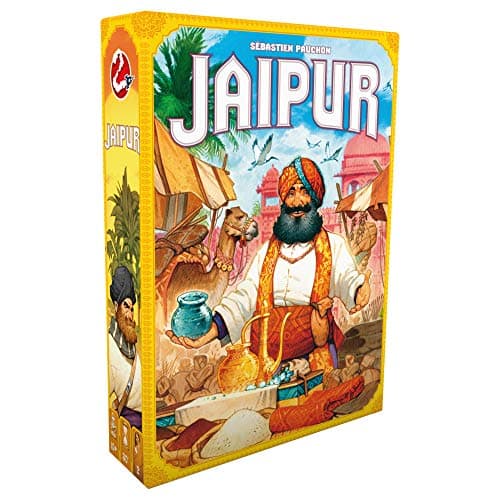
Set collection and trading. You are gathering matching goods and deciding when to cash them in. Jaipur is the definitive version: no attacking, constant tension, and a race for tokens that shrink as they are taken. This branch suits households where direct conflict is not welcome.
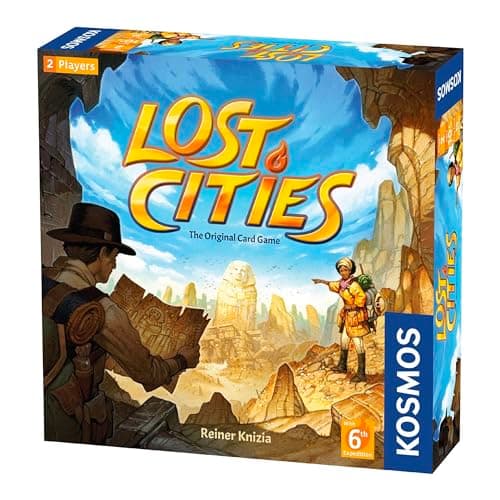
Press-your-luck commitment. You commit to a line before you know whether the cards will support it. Lost Cities is the purest example, where every expedition you start costs twenty points before it scores anything. This branch produces the biggest swings and the best stories.
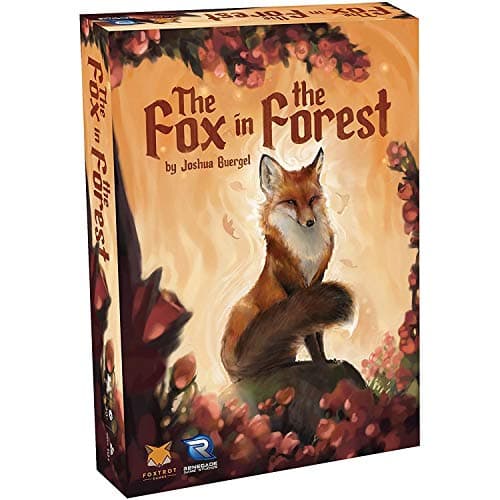
Trick-taking and deduction. You are reading what the other person holds from what they play. The Fox in the Forest and Love Letter live here. This branch rewards paying attention to your opponent rather than optimizing your own position, and it is the one that most rewards repeat play with the same person.
03
Built for two versus plays at two, in this format
Card games are unusually honest here. Three of the five picks below are published for exactly two players: Jaipur, Lost Cities and The Fox in the Forest.
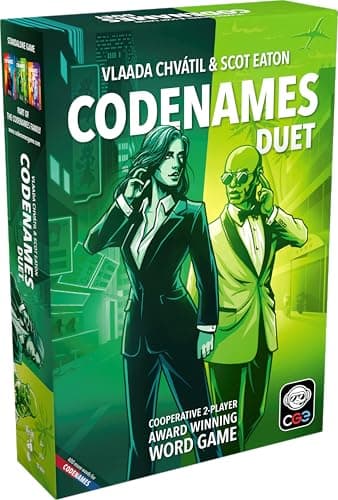
The two exceptions are worth knowing about. Codenames: Duet is listed by Czech Games Edition as 2+, not 2, even though it is designed around two people and is at its best that way. Love Letter is 2 to 4 in its original edition and 2 to 6 in the second, and it genuinely sharpens at two, where the deck becomes countable and it turns into a deduction duel rather than a party filler.
Neither exception is a reason to avoid them. But if your reason for shopping this shelf is that your household is two people permanently, the three two-player-only designs spent their whole design budget on exactly that.
04
How much luck is the right amount
This is the question that should drive your pick, and almost no card game list asks it.
Lost Cities is the high-variance end. Commit to an expedition and the cards for it may simply never come, and no amount of skill rescues that hand. Across three rounds the better player usually wins, but any single round can go either way. If a run of bad draws will sour your evening, this is the wrong game.
Jaipur sits in the middle. You draw from a visible market rather than blind, so you can plan around what is actually available, and the best-of-three structure means a bad round is a setback rather than a defeat.
The Fox in the Forest is the lowest-variance of the three, because the greedy-scoring rule means a weak hand is often easier to play well than a strong one -- you are aiming for a middle band, not for maximum tricks.
The practical rule: more luck is better when there is a skill gap, less luck is better when you are evenly matched and want your decisions to be what decides it.
05
What a card game cannot do
Worth saying plainly, because the format has real limits and a list that pretends otherwise is selling.
Cards do not work outdoors. Any breeze ends the game and there is no fix. If you want something for a beach, a tent or a garden table on a windy day, a tile game is the honest answer and Hive is the one we would point you at.
Cards also give you very little table presence. If part of the appeal is a game that looks impressive set up, or if you are trying to persuade someone that board games are worth an evening, a deck of cards is working against you. Something with three-dimensional pieces will do that job better.
And a card game rarely fills a whole evening on its own. Most of these run 20 to 30 minutes, which is a feature on a weeknight and a limitation if you have cleared a Saturday.
06
What we did instead of playing these
We have not played these games. What we did: took the player count, playing time and age rating from each publisher's own product page where reachable and the game's reference entry where not, confirmed each is still in print by checking those pages are live, and ranked on the format criteria set out above.
Every figure on this page links to its source at the bottom. There are no ratings out of ten here, and no prices in this prose -- the buy buttons carry live pricing, stamped with the date checked.
The best first two-player card game there is: five minutes to teach, and it keeps giving for years.
A two-player-only trading card game. You collect and sell goods in sets, racing the other trader for bonus tokens that shrink as they are taken. Best of three rounds decides it.
Players
2
Playing time
30 minutes
Age
10+
Designer
Sebastien Pauchon
Publisher
Asmodee / GameWorks
Published
2009
Who should skip it
Skip it if you want a board on the table. This is cards and tokens, and it looks slight next to a game with a map.
Built for two2 players · 30 minutes · ages 10 and up
Old enough to vote and still the cleanest press-your-luck card game for two.
A two-player-only card game about mounting expeditions. Every card you play must be higher than the last on that color, so committing early is how you score and also how you go negative.
Players
2
Playing time
30 minutes
Age
10 and up
Designer
Reiner Knizia
Publisher
Kosmos / Rio Grande Games
Published
1999
Who should skip it
Skip it if a run of bad draws will sour the evening. The cards decide more here than in anything else we recommend.
A trick-taking game for two that actually works, which almost no trick-taker manages.
A two-player-only trick-taking card game. Winning too many tricks makes you greedy and scores nothing, so the game is about landing in a narrow band -- and odd-numbered cards each break a rule.
Players
2
Playing time
30 minutes
Age
10+
Designer
Joshua Buergel
Publisher
Foxtrot Games / Renegade Game Studios
Published
2017
Who should skip it
Skip it if neither of you has played a trick-taking game before. The scoring rewards losing on purpose, and that lands badly cold.
Built around two people and honest about it, though the publisher lists it as 2+ rather than two only.
A cooperative word-association game. You each see half of a shared key card and give one-word clues to guide the other to the right agents in a 5x5 grid, avoiding the assassin.
Players
2+
Playing time
15 minutes
Age
11+
Designer
Vlaada Chvatil and Scot Eaton
Publisher
Czech Games Edition
Who should skip it
Skip it if one of you thinks in wildly different associations from the other. That gap is funny once and exhausting by the fourth game.
Plays at two2 to 6 (Second Edition) players · 20 minutes
The smallest game we recommend, and at two it becomes a tight deduction duel rather than a party filler.
A supports-more microgame that sharpens at two. You hold one card, draw a second, and play one -- deducing what the other person is holding from what they discard.
Players
2 to 6 (Second Edition)
Playing time
20 minutes
Designer
Seiji Kanai
Publisher
Alderac Entertainment Group, then Z-Man Games
Published
2012
Who should skip it
Skip it if you want a main event. This is a five-minute game you play four times, not an evening.
Jaipur. It is published for exactly 2 players at 30 minutes, teaches in about five minutes, has no direct attacking, and the shrinking bonus tokens keep the tension constant without any confrontation.
+−What is the best two-player card game for a small table?
The Fox in the Forest. Trick-taking means the shared area is two cards at a time, which is the smallest playing footprint of any real game we cover.
+−Which two-player card game has the most luck in it?
Lost Cities. Every expedition costs 20 points before it scores and the cards for it may never arrive. That variance is exactly why it works in households with a skill gap, and exactly why evenly matched players sometimes dislike it.
+−Are card games good for couples?
Very. They fit a coffee table, cost less than a boxed game, and the shuffle means the stronger player does not win every time -- which matters more when the same two people play weekly.
+−Is Codenames: Duet a two-player-only card game?
No. Czech Games Edition lists it as 2+ on its own product page. It is designed around two players and best at two, but the stated count is a range, so we label it Plays at two.
+−Can you play card games outdoors?
Not well. Any breeze ends a card game and there is no practical fix. For outdoors, a tile game like Hive is the honest recommendation because the pieces cannot blow away and it needs no table.