Two-player games fall into three footprint categories: hand-only games needing a small shared area, shared-layout games needing a wide central spread, and personal-board games needing space in front of each player. Card games in the first category fit almost anywhere.
We earn a commission when you buy through links on this page, at no extra cost to you. It does not change which games we recommend or what we say about them. How this site is funded.
This is the methodology page behind our travel picks. Box dimensions are easy to look up when a publisher states them. Table footprint -- how much surface the game needs while you are playing -- is almost never published by anyone, and it is the number that decides whether a game works on your coffee table.
So here is how we categorize it, and how you can check a game yourself before spending anything.
The two games that break the rules
Hive is the outlier in the good direction. It has no board at all and no fixed footprint: the tiles build the playing surface, so it needs exactly as much room as the game has grown to. It starts as small as anything here and expands, which makes it excellent on the ground or a bed and occasionally awkward on a very small table late in a game.
7 Wonders Duel is the outlier in the other direction. It is a card game, so people assume it packs small at the table, and its age layouts are among the widest spreads of anything we recommend. It is a fine game for a dining table and a poor one for a coffee table.
04What this means for buying
If you play on a coffee table, sofa or anywhere small, stay in the hand-only category and treat everything else as a maybe. The Fox in the Forest and Lost Cities are the two best games here that genuinely fit small spaces.
If you have a real table, footprint stops mattering and you can buy on merit. In that case the travel category is only relevant when you are actually traveling.
And if the surface is unreliable -- outdoors, a moving vehicle, a bed -- footprint is less important than component type. Tiles beat cards every time, which is the whole argument for Hive.
What we would buy
Picks drawn from the games covered on this site, chosen against the criteria above.
We earn a commission when you buy through links on this page, at no extra cost to you. It does not change which games we recommend or what we say about them. How this site is funded.
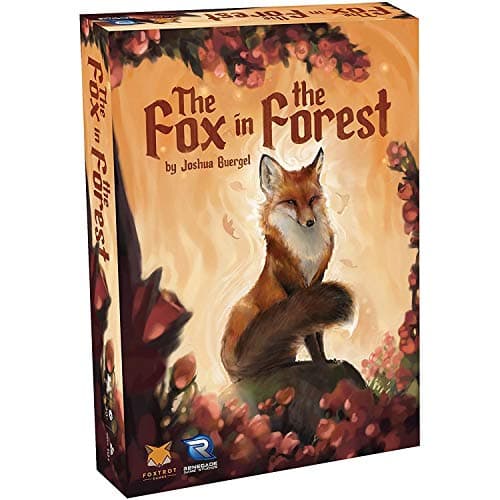
2 players · 30 minutes · ages 10+
A trick-taking game for two that actually works, which almost no trick-taker manages.
A two-player-only trick-taking card game. Winning too many tricks makes you greedy and scores nothing, so the game is about landing in a narrow band -- and odd-numbered cards each break a rule.
- 2
- 30 minutes
- 10+
- Joshua Buergel
- Foxtrot Games / Renegade Game Studios
- 2017
Skip it if neither of you has played a trick-taking game before. The scoring rewards losing on purpose, and that lands badly cold.
Specs from The Fox in the Forest - Wikipedia infobox.
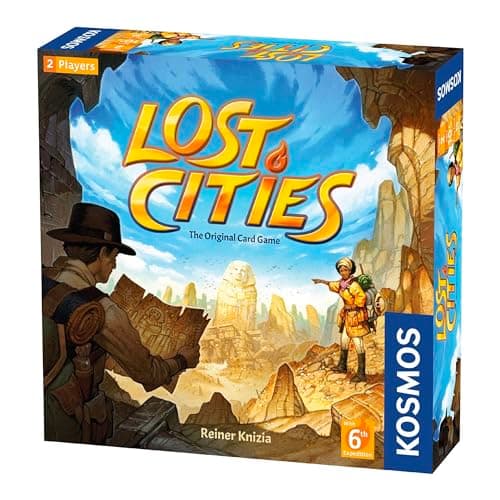
2 players · 30 minutes · ages 10 and up
Old enough to vote and still the cleanest press-your-luck card game for two.
A two-player-only card game about mounting expeditions. Every card you play must be higher than the last on that color, so committing early is how you score and also how you go negative.
- 2
- 30 minutes
- 10 and up
- Reiner Knizia
- Kosmos / Rio Grande Games
- 1999
Skip it if a run of bad draws will sour the evening. The cards decide more here than in anything else we recommend.
Specs from Lost Cities - Wikipedia infobox.
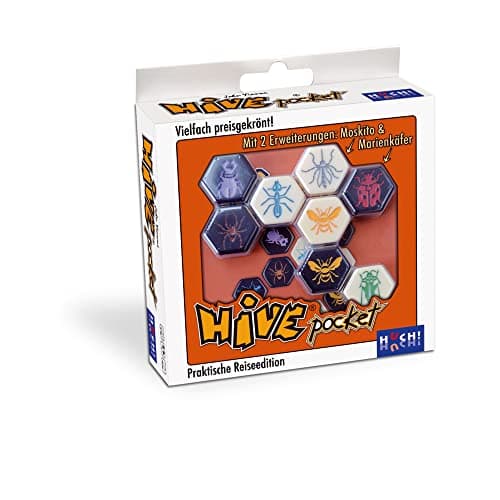
2 players · 20 minutes · ages 9 and up
The same game as Hive in a box barely wider than a postcard, and it ships with two extra pieces.
The travel edition of Hive. 26 tactile pieces in a 140mm box with a soft travel bag, including two pieces the standard set sells separately.
- 2
- 20 minutes
- 9 and up
- Gen42 Games
- 140mm x 140mm x 50mm
Skip it if you play at a real table every time. The full-size tiles feel better in the hand and cost about the same.
Specs from Hive Pocket - Gen42 Games (publisher).
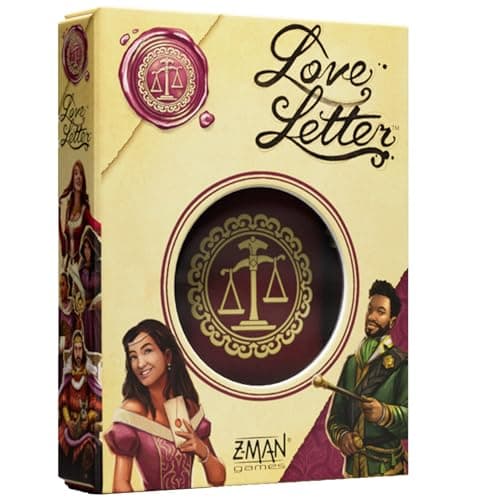
2 to 6 (Second Edition) players · 20 minutes
The smallest game we recommend, and at two it becomes a tight deduction duel rather than a party filler.
A supports-more microgame that sharpens at two. You hold one card, draw a second, and play one -- deducing what the other person is holding from what they discard.
- 2 to 6 (Second Edition)
- 20 minutes
- Seiji Kanai
- Alderac Entertainment Group, then Z-Man Games
- 2012
Skip it if you want a main event. This is a five-minute game you play four times, not an evening.
Specs from Love Letter (card game) - Wikipedia infobox.