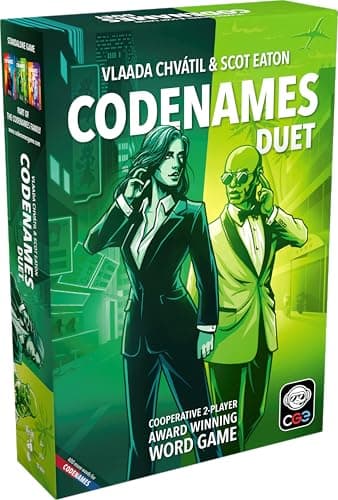
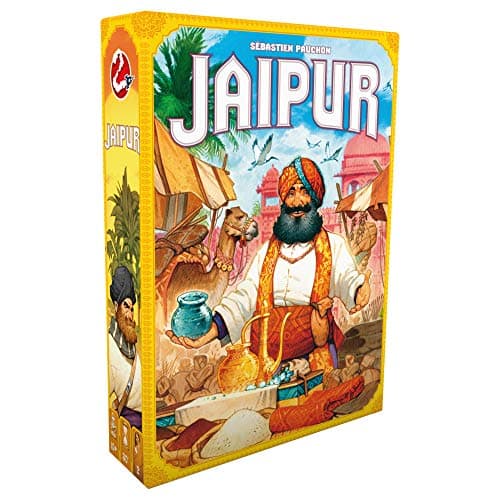
The best beginner board games for two players are Jaipur, Onitama, Patchwork, Lost Cities, Santorini and Codenames: Duet. All teach in under ten minutes and run 15 to 30 minutes per their publishers. Jaipur is the best single first purchase.
We earn a commission when you buy through links on this page, at no extra cost to you. It does not change which games we recommend or what we say about them. How this site is funded.
Easy is the wrong word for what you actually want. You want a game with a short rules explanation and a long ceiling -- the two things are unrelated, and conflating them is why so many first purchases end up unplayed.
Chess has trivially short rules and an enormous ceiling. A children's roll-and-move game has short rules and no ceiling at all. What separates the games below is that every one of them can be taught in under ten minutes and none of them runs out of interesting decisions in a year.
The other thing to get right is honesty about what beginner means here. None of these are simplified versions of better games. They are complete designs that happen to have small rulebooks, which is a much harder thing to build and the reason several of them have stayed in print for over two decades.
What game weight actually means
You will see games described by weight or complexity, usually on a one-to-five scale. It is a useful shorthand and it is measuring something narrower than people assume: how much rules overhead the game carries, not how hard it is to play well.
A low-weight game can be extremely difficult to master -- Hive is close to the lightest possible rules set and is genuinely deep. A high-weight game can be strategically shallow and just fiddly. When someone recommends a light game to a beginner, what they should mean is a game with low rules overhead, and what they too often mean is a game with no decisions in it. Check which you are being sold.
03Teaching a game to exactly one person
Teaching two-player games is easier than teaching a group and almost all the advice out there is written for groups. Some things that only apply at two.
You can play open-handed for the first game. With one other person there is no fairness problem in showing your cards and talking through why you would take a particular action -- it is the fastest teaching tool available and it costs one throwaway game. Do not explain the scoring in full before the first turn; explain the action, play three turns, then explain scoring once they can see what it is describing. And never teach at the end of a long day. Rules explanations at 11pm are how good games get a bad first impression they never recover from.
04Buying one game rather than three
The standard mistake is buying a starter bundle. Three light games arriving at once means none of them gets the ten plays it needs to become the game you reach for, and a shelf of half-learned games is genuinely worse than one game you both know cold.
Buy one. Play it eight or ten times. You will learn more about what the two of you actually enjoy from that than from three shallow passes, and the second purchase will be dramatically better aimed. If you want a single recommendation with no caveats: Jaipur. Two players stated by the publisher, 30 minutes, teaches in five, and people who own hundreds of games still keep it.
The picks in full
2 players · 30 minutes · ages 10+
The best first two-player card game there is: five minutes to teach, and it keeps giving for years.
A two-player-only trading card game. You collect and sell goods in sets, racing the other trader for bonus tokens that shrink as they are taken. Best of three rounds decides it.
- 2
- 30 minutes
- 10+
- Sebastien Pauchon
- Asmodee / GameWorks
- 2009
Skip it if you want a board on the table. This is cards and tokens, and it looks slight next to a game with a map.
Specs from Jaipur - Space Cowboys (publisher: players, time, age, designer, contents), Jaipur (card game) - Wikipedia infobox (2009 first edition, publishers).
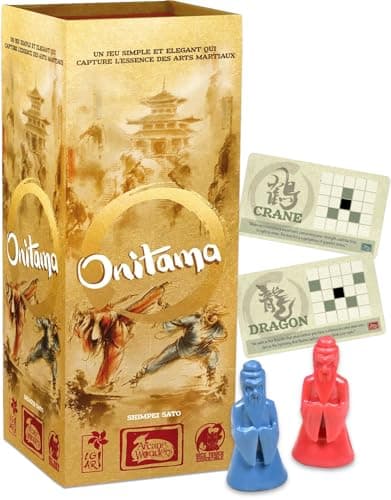
2 players · 15 minutes · ages 14+
Perfect information, sixteen move cards, and a rules explanation that takes under two minutes.
A two-player-only abstract on a 5x5 grid. Five move cards are in play at once and they physically pass between the two of you, so arming yourself always arms the opponent.
- 2
- 15 minutes
- 14+
- Arcane Wonders
Skip it if you dislike losing to a mistake you can see clearly in hindsight. Nothing is hidden, so every loss is yours.
Specs from Onitama - Arcane Wonders (publisher).
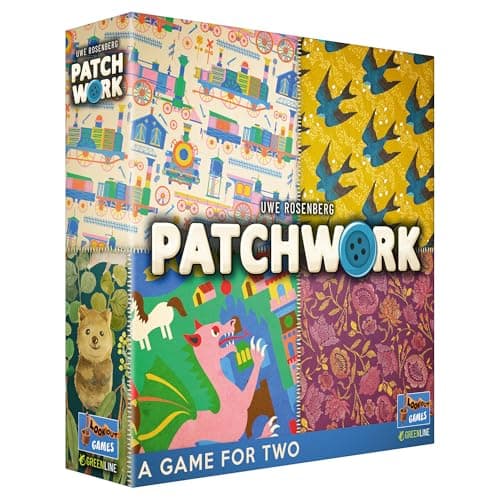
2 players · about 30 minutes · ages 8+
The gentlest good game on this site. Two quilts, no attacking, and a surprisingly sharp puzzle underneath.
A two-player-only tile-laying game. You buy fabric patches on a shared time track and fit them onto a personal 9x9 quilt board, paying with buttons and with time.
- 2
- about 30 minutes
- 8+
- Uwe Rosenberg
- Lookout Games
- 2014
Skip it if you want to interact. You are mostly solving your own board, and the only contact is who takes which patch first.
Specs from Patchwork - Lookout Games (publisher: players, time, age, designer, contents), Patchwork (board game) - Wikipedia infobox.
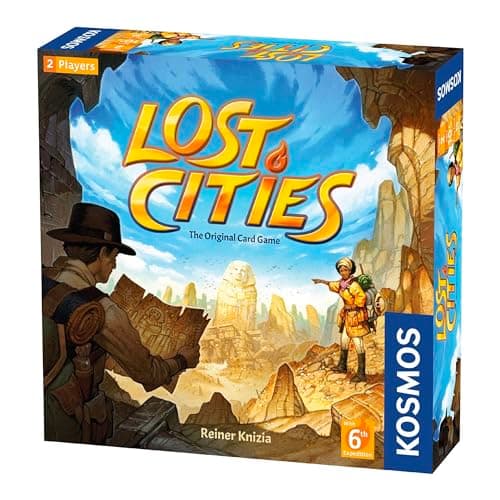
2 players · 30 minutes · ages 10 and up
Old enough to vote and still the cleanest press-your-luck card game for two.
A two-player-only card game about mounting expeditions. Every card you play must be higher than the last on that color, so committing early is how you score and also how you go negative.
- 2
- 30 minutes
- 10 and up
- Reiner Knizia
- Kosmos / Rio Grande Games
- 1999
Skip it if a run of bad draws will sour the evening. The cards decide more here than in anything else we recommend.
Specs from Lost Cities - Wikipedia infobox.
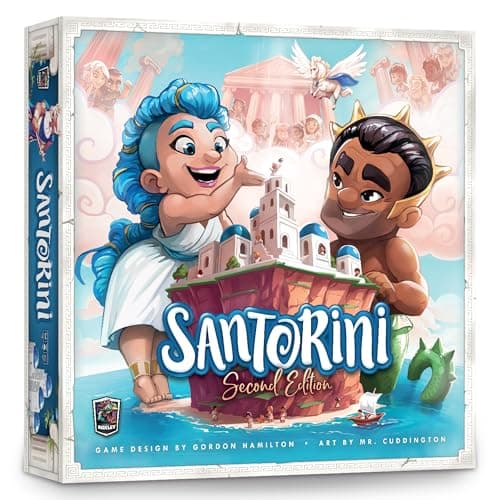
2-4 players · 20 minutes · ages 8+
The best-looking game here, and the god powers turn a simple abstract into dozens of different games.
A supports-more abstract that plays well at two. Move a worker, then build. First to step onto a third level wins -- and each side draws a god power that bends one rule.
- 2-4
- 20 minutes
- 8+
- Gord Hamilton
- Roxley Games
Skip it if you want your two-player game to be two-player only. It supports up to four, and the base rules are thin without the god powers.
Specs from Santorini - Roxley Games (publisher).
2+ players · 15 minutes · ages 11+
Built around two people and honest about it, though the publisher lists it as 2+ rather than two only.
A cooperative word-association game. You each see half of a shared key card and give one-word clues to guide the other to the right agents in a 5x5 grid, avoiding the assassin.
- 2+
- 15 minutes
- 11+
- Vlaada Chvatil and Scot Eaton
- Czech Games Edition
Skip it if one of you thinks in wildly different associations from the other. That gap is funny once and exhausting by the fourth game.
Specs from Codenames: Duet - Czech Games Edition (publisher).