The two-player games that last longest are Hive, 7 Wonders Duel, Onitama, Jaipur and Splendor Duel. All five combine a small rules footprint with a decision space that does not empty out, which is what actually produces replay value for a pair -- not the size of the box.
We earn a commission when you buy through links on this page, at no extra cost to you. It does not change which games we recommend or what we say about them. How this site is funded.
Replayability means something different for two people than it does for a group. A game that comes out four times a year with friends can coast on novelty. A game that two people own gets played by the same two people, repeatedly, often within the same week -- and it gets solved, or it does not, much faster than a group game ever would.
That is a specific engineering problem, and only some games solve it. This page sets out the four properties that actually produce longevity for a pair, then ranks five games against them. Every pick is published for exactly two players, and every one carries a reason you might skip it.
01
How we judged it
Decision space that does not empty. The question the game asks has to stay genuinely hard after both of you understand it. Games where a dominant line exists die fast at two, because the same opponent will find it.
A variance source that is not just luck. Something has to make each game start differently -- a shuffled display, a modular setup, a changing board -- without letting the dice decide who wins.
A short enough session to play again immediately. The single strongest predictor of a game staying on the table is whether losing costs you twenty minutes or two hours. Best-of-three is where two-player games live.
A rules footprint you never have to relearn. A game you must re-teach after a month away is a game that quietly stops being played, however good it is.
02
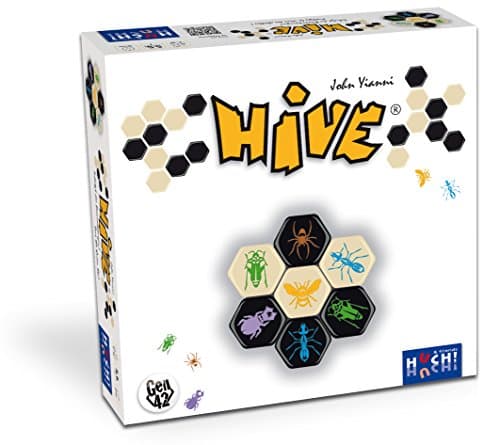
1. Hive -- the one that survives the hundredth game
Gen42 Games publishes Hive for exactly 2 players at 20 minutes, ages 9 and up. There is no board: 22 tiles build the playing surface as you place them, and you win by surrounding the opposing queen bee.
It scores on the first and fourth criteria better than anything else we cover. There is no hidden information and no luck at all, so the decision space is the pure thing -- and because the board is created by play, no two games have the same geometry. The rules fit on a card and you will never relearn them.
The honest downside is the one it has always had: there is no theme to carry you through a bad position. If abstract games leave you cold, a hundred plays of Hive is a threat rather than a promise. And with no luck whatever, a consistent skill gap stays visible forever, which is corrosive in some households.
03
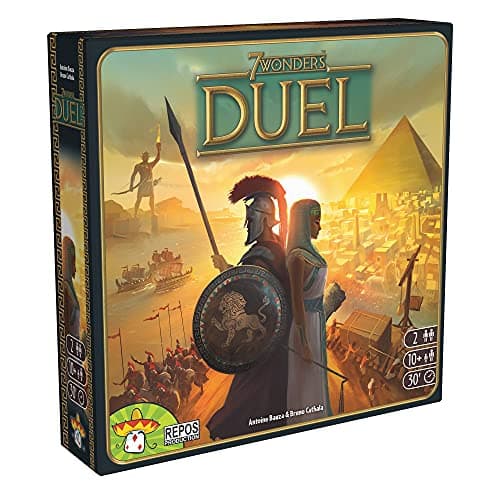
2. 7 Wonders Duel -- the deepest decision space
Repos Production publishes it for exactly 2 players at 30 minutes, ages 10 and up. Three win conditions run simultaneously -- civilian points, military supremacy and scientific dominance -- and two of them end the game on the spot.
Its replay value comes from the second criterion. The card display is shuffled and partly hidden each age, so the specific tools available change every game, while the strategic question stays constant: which of three races am I actually in, and which is the other person in? That is a question a pair can chew on for years.
Two cautions. The symbol language takes a game or two to read fluently, so it fails the fourth criterion on first contact -- though once learned, it is learned for good. And it is the least relaxing game on this list: three live win conditions mean you are always watching the other person.
04
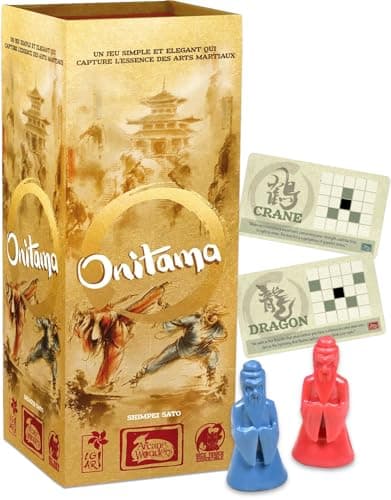
3. Onitama -- the most replay value per minute
Arcane Wonders publishes Onitama for exactly 2 players at 15 minutes, ages 14 and up. It is an abstract on a 5x5 grid, and the reason it belongs on this page is its setup: five move cards are in play at once, drawn from a larger deck, and they physically pass between the two of you as you use them.
That is the cleanest solution to the variance problem we know of. The rules never change and there is no luck during play, but the specific set of moves available is different every game, so the position you are solving is new while the game you are learning is the same. Arming yourself always arms your opponent, because the card you just used goes to them.
Skip it if you dislike losing to a mistake you can see clearly in hindsight. Nothing is hidden, so every loss is yours, and at fifteen minutes you will have plenty of them to look at.
05
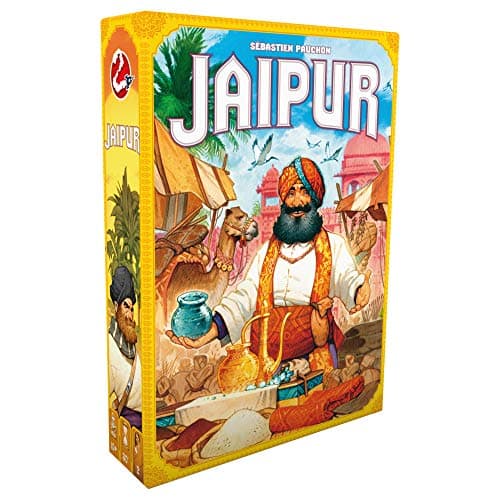
4. Jaipur -- the one that actually gets played
Space Cowboys publishes Jaipur for exactly 2 players at 30 minutes, ages 10 and up. It is on this list for the third criterion, which is the one most buying guides ignore: the game that lasts is the game you are willing to start on a weeknight.
It teaches in five minutes, plays as best of three rounds, and is built around one decision that never gets easy -- sell now, or hold for a bigger set while the bonus tokens shrink. The shuffle means a weaker player wins real rounds, which in a two-person household is the difference between a game that stays on the shelf and one that comes off it.
The downside is presence rather than depth. It is cards and tokens, and it looks slight next to a game with a board. If the two of you want an evening to feel like an occasion, this is not the box that does it.
06
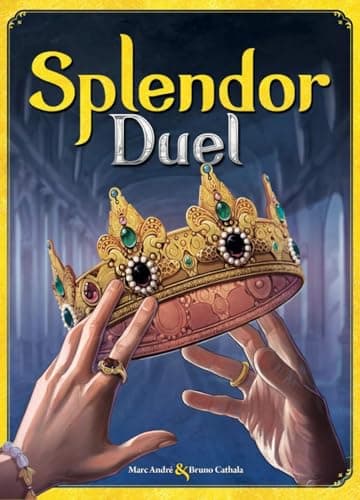
5. Splendor Duel -- the newest of the five
Space Cowboys publishes it for exactly 2 players at 30 minutes, ages 10 and up. Its replay value comes from a mechanism rather than a shuffle: tokens must be taken from a shared grid in uninterrupted lines, so the legal moves are different every single turn and the board rearranges itself constantly.
Add three live victory conditions -- 20 prestige points, 10 crowns, or 10 prestige in a single color -- and the strategic question changes game to game depending on which race the cards make available. It scores well on criteria one and two, and its half-hour length keeps it on the right side of criterion three.
It is the least proven pick here simply because it is the newest, released in 2022 against Hive and Jaipur having been in print for well over a decade. Staying in print is itself a longevity signal, and Splendor Duel has not had time to earn it yet. Skip it if you want a game where you can attack the other person -- the tension is entirely about the shared board.
07
What we deliberately left off
Campaign games. Gloomhaven: Jaws of the Lion has a 25-scenario story and is excellent, but a campaign has a defined end -- it is a long game rather than a replayable one, and once the story is finished the box does not renew itself the way these five do.
Games where the deck decides too much. Lost Cities is one of our favorite fillers and it is deliberately absent here: it is the highest-variance game we cover, and while that is a feature on a tired evening, it fails the second criterion. Variance should change the puzzle, not the winner.
Anything we could not verify as currently purchasable. Every pick above was checked against its live retail listing before it was featured.
08
What we did instead of playing these
We have not played these games. What we did: took every player count, playing time and age rating from each publisher's own product page, confirmed each is currently in print, and judged replayability from published structure -- how setup varies, how much information is hidden, how long a session runs -- rather than from play counts we do not have. We do not publish community ratings, so nothing here is ranked on a score we cannot verify. No price appears in this prose.
What we would buy
Picks drawn from the games covered on this site, chosen against the criteria above.
We earn a commission when you buy through links on this page, at no extra cost to you. It does not change which games we recommend or what we say about them. How this site is funded.
Chess without a board, in tactile tiles, and it survives the hundredth game better than most.
A two-player-only abstract strategy game with no board: 22 tactile tiles that build the playing surface as you place them. Surround the opposing queen bee to win.
Players
2
Playing time
20 minutes
Age
9 and up
Publisher
Gen42 Games
Box size
210mm x 210mm x 50mm
Who should skip it
Skip it if abstract games leave you cold. There is no theme here to carry you through a bad position.
The strongest all-round two-player game in print, and the one most couples settle on.
A two-player-only card drafting game where each side builds a civilization across three ages. Three ways to win -- civilian points, military supremacy and scientific dominance -- run at once, so every card you take is also a card denied.
Players
2
Playing time
30 minutes
Age
10+
Designer
Antoine Bauza and Bruno Cathala
Publisher
Repos Production
Published
2015
Who should skip it
Skip it if you want a relaxing evening. Three win conditions run at once, so you are always watching what the other person is about to do.
Perfect information, sixteen move cards, and a rules explanation that takes under two minutes.
A two-player-only abstract on a 5x5 grid. Five move cards are in play at once and they physically pass between the two of you, so arming yourself always arms the opponent.
Players
2
Playing time
15 minutes
Age
14+
Publisher
Arcane Wonders
Who should skip it
Skip it if you dislike losing to a mistake you can see clearly in hindsight. Nothing is hidden, so every loss is yours.
The best first two-player card game there is: five minutes to teach, and it keeps giving for years.
A two-player-only trading card game. You collect and sell goods in sets, racing the other trader for bonus tokens that shrink as they are taken. Best of three rounds decides it.
Players
2
Playing time
30 minutes
Age
10+
Designer
Sebastien Pauchon
Publisher
Asmodee / GameWorks
Published
2009
Who should skip it
Skip it if you want a board on the table. This is cards and tokens, and it looks slight next to a game with a map.
The gentler duel: an engine builder where you are racing rather than attacking, and the shared gem board is the whole game.
A two-player-only engine-building game in the Splendor universe. You draft gem tokens from a shared board to buy Jewel cards across three levels, chasing three separate victory conditions -- points, a color majority, or crowns. 67 Jewel cards, 25 tokens, 3 Privilege scrolls, 4 Royal cards.
Players
2
Playing time
30 minutes
Age
10+
Designer
Bruno Cathala and Marc Andre
Publisher
Space Cowboys
Published
2022
Who should skip it
Skip it if you want direct conflict. The tension is in what you take from the shared board before the other person can, never in anything you do to their cards.
+−Which two-player board game has the best replayability?
Hive, on structure: no luck, no hidden information, and a board created by play so no two games share a geometry. If abstracts do not appeal, 7 Wonders Duel has the deepest decision space of anything we cover.
+−What makes a two-player game replayable?
Four things: a decision space that stays hard once you both understand it, a variance source that changes the puzzle without deciding the winner, a session short enough to immediately play again, and rules you never have to relearn after a break.
+−Are campaign games replayable?
Not in this sense. A campaign like Gloomhaven: Jaws of the Lion is a long game with a defined end rather than one that renews itself. It is a good purchase for a pair who want a project, not for a pair who want a game they will still be playing in three years.
+−Does a bigger box mean more replay value?
No, and at two players it is often the reverse. The strongest predictor of a game staying on the table is whether you can finish it and immediately play again, which favors 15 to 30 minute games over big-box releases.
+−Which is the most replayable game for a household with a skill gap?
Jaipur. The shuffle gives the weaker player genuine wins across a best-of-three match, which keeps the game coming off the shelf. Hive and Onitama do the opposite -- with no luck at all, a skill gap stays visible every game.