Abstract strategy games have no hidden information and no luck, so the better player wins nearly every time. Buy Hive for the highest ceiling and true portability, Onitama for the shortest teach and more variety, or Santorini for table presence -- but only if a skill gap will not sour it.
We earn a commission when you buy through links on this page, at no extra cost to you. It does not change which games we recommend or what we say about them. How this site is funded.
Abstract games are the oldest thing in the hobby and the easiest to buy wrong. They look like safe purchases -- short rules, small boxes, no fiddly bits -- and they carry one property that decides whether they work in your house.
There is no luck. None. The better player wins, and keeps winning.
01
What no luck actually means at home
In a card game, a loss can be shrugged off: the draw was bad. That excuse is doing more work than people admit, and abstracts remove it entirely.
If the two of you are closely matched, that is wonderful. Every game is a real contest and improvement is visible and satisfying. If one of you is clearly stronger, a zero-luck game produces a lopsided record with no way to explain it away, and that is genuinely corrosive over months.
Before buying, ask the uncomfortable question: are we evenly matched at this kind of thinking, and if not, does that bother the person who loses? If it does, buy Jaipur or Lost Cities instead, where the deck gives the weaker player real wins that still feel earned.
02
Depth versus variety, and which you want
Abstracts split into two kinds and the split matters more than any other feature.
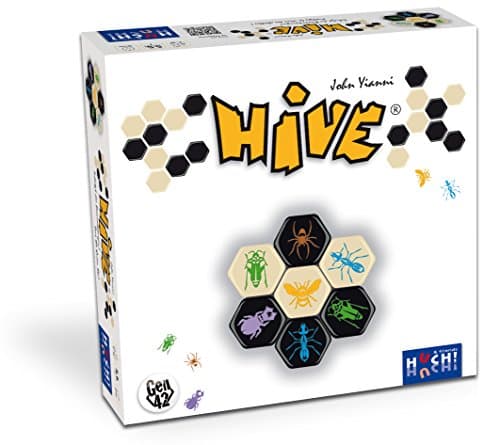
Depth games are identical every time. Hive has no setup randomness whatsoever, which means all improvement is yours and the ceiling is very high. This suits a pair who will play one game hundreds of times and enjoy getting better at it -- the chess relationship.
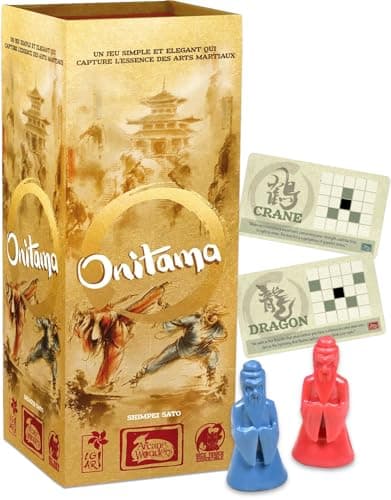
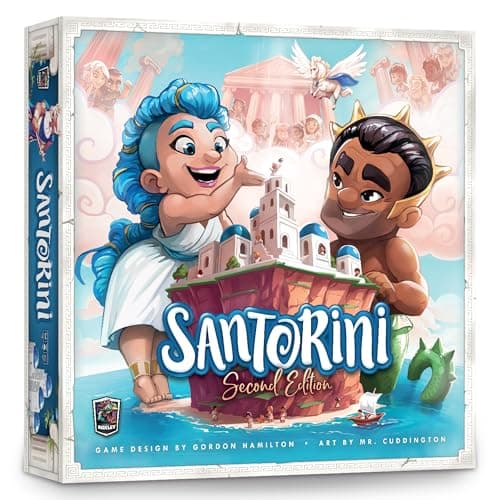
Variety games randomize the tools. Onitama draws five of sixteen move cards, so each game is a fresh puzzle rather than a deeper one. Santorini goes further with god powers that break rules outright. These suit a pair who wants the box to feel different on a Tuesday, at the cost of a lower ceiling.
Neither is better. But buying a depth game for a household that wants novelty is how good games end up unplayed.
03
Rules length is not difficulty
The most persistent confusion in this category. Hive's rules fit on a card and it is genuinely deep. Onitama teaches in under two minutes and has real tactical bite. Neither is a simple game; both are simply-explained games.
Conversely, plenty of heavier games are complicated rather than deep -- lots of rules producing few meaningful decisions. When someone recommends an abstract as easy, check whether they mean easy to learn or easy to play well. Almost always they mean the first, and the second is what determines whether you keep it.
04
Portability, which abstracts win at
This is where the category quietly beats everything else. Hive needs no board at all -- the tiles build their own playing surface, so it works on any flat thing including the ground, and the pieces cannot bend or blow away. Gen42 publishes Hive Pocket at 140mm x 140mm x 50mm.
Onitama needs its roll-up mat flat, so it wants an actual surface. Santorini has three-dimensional building pieces and is the least portable of the three by a wide margin.
If the game is going to travel, this is the deciding factor and it points at Hive without much argument.
05
Which to buy
Hive if you want the highest ceiling, want to play anywhere, or like the idea of getting genuinely good at one thing. Buy the Pocket edition unless it will only ever live at home.
Onitama if you want the shortest rules explanation available and prefer variety between games to mastery of one.
Santorini if table presence matters -- it is the most visually persuasive game here -- or if a younger player might join, at ages 8+ against Onitama's 14+.
What we would buy
Picks drawn from the games covered on this site, chosen against the criteria above.
We earn a commission when you buy through links on this page, at no extra cost to you. It does not change which games we recommend or what we say about them. How this site is funded.
Chess without a board, in tactile tiles, and it survives the hundredth game better than most.
A two-player-only abstract strategy game with no board: 22 tactile tiles that build the playing surface as you place them. Surround the opposing queen bee to win.
Players
2
Playing time
20 minutes
Age
9 and up
Publisher
Gen42 Games
Box size
210mm x 210mm x 50mm
Who should skip it
Skip it if abstract games leave you cold. There is no theme here to carry you through a bad position.
Perfect information, sixteen move cards, and a rules explanation that takes under two minutes.
A two-player-only abstract on a 5x5 grid. Five move cards are in play at once and they physically pass between the two of you, so arming yourself always arms the opponent.
Players
2
Playing time
15 minutes
Age
14+
Publisher
Arcane Wonders
Who should skip it
Skip it if you dislike losing to a mistake you can see clearly in hindsight. Nothing is hidden, so every loss is yours.
The best-looking game here, and the god powers turn a simple abstract into dozens of different games.
A supports-more abstract that plays well at two. Move a worker, then build. First to step onto a third level wins -- and each side draws a god power that bends one rule.
Players
2-4
Playing time
20 minutes
Age
8+
Designer
Gord Hamilton
Publisher
Roxley Games
Who should skip it
Skip it if you want your two-player game to be two-player only. It supports up to four, and the base rules are thin without the god powers.
A game with no hidden information and no luck, usually with a minimal theme. Hive, Onitama and Santorini are the examples we recommend for two players.
+−Are abstract games bad if one player is much better?
They can be. With no luck there is nothing to attribute a loss to, so a lopsided record has no cushion. A card game like Jaipur or Lost Cities is the better choice in that situation.
+−Which two-player abstract has the most depth?
Hive. It has no setup randomness at all, so the skill ceiling is the highest of the three and improvement is entirely down to the player.
+−Are short rules the same as an easy game?
No. Hive's rules fit on a card and the game is deep. Rules length measures how long the explanation takes, not how hard the game is to play well.