Teaching one person is different from teaching a group: play the first game open-handed, explain the action before the scoring, start playing after about three sentences, and never teach at the end of a long day.
We earn a commission when you buy through links on this page, at no extra cost to you. It does not change which games we recommend or what we say about them. How this site is funded.
Teaching a board game to a group is a performance: you explain once, to everyone, and you cannot stop halfway because five people are waiting. Nearly all the advice online is written for that situation.
Teaching one person has none of those constraints, and using group technique wastes every advantage you have.
01
Play the first game open-handed
This is the biggest advantage and almost nobody uses it. With one other person there is no fairness problem in playing with your cards visible and talking through your reasoning.
It compresses learning enormously. Instead of explaining that a card can be held for later, you show a hand and say: I am keeping this because the market has two of them and I want the set. That is a rule, a strategy and a worked example in one sentence, and it lands in a way that abstract explanation does not.
The cost is one throwaway game. That is nothing -- and the game is not really thrown away, because the person learning is engaged rather than being lectured.
02
Teach the action before the scoring
The standard order -- explain the components, then the rules, then how you win -- is backwards for one learner. Scoring is abstract until you can see what it is describing.
Better sequence: what you do on a turn, three turns played, then how those turns score. Now the scoring explanation refers to things on the table that they just did, and it takes a third as long.
The exception is a game where an early decision is irreversible and scoring-dependent. Lost Cities is the clear case: committing to an expedition costs 20 points, and someone who does not know that will commit badly and feel cheated. Mention that one rule up front, then go back to the normal order.
03
Start before you have finished explaining
Say three sentences and deal. Everything else can be explained as it becomes relevant, and most of it will become relevant within a few turns.
This works at two players specifically because you can pause without holding up a table. Reaching a situation the rules cover, stopping, explaining it, and continuing takes ten seconds and is retained far better than the same rule delivered in a block five minutes earlier.
The rule of thumb: if a rule will not come up in the first three turns, do not mention it yet.
04
Timing and framing
Never teach at the end of a long day. Rules at 11pm are how a good game gets a first impression it never recovers from.
Do not oversell it. Saying this is the best game ever sets a bar the first confused game cannot clear. Saying it takes about half an hour and the rules are short sets an accurate one.
Do not apologize for the game either. Saying it seems complicated but tells them to expect difficulty before they have found any.
Let them make a bad move. Correcting every suboptimal decision turns the game into a test. One suggestion per game is plenty.
05
Which games are easiest to teach this way
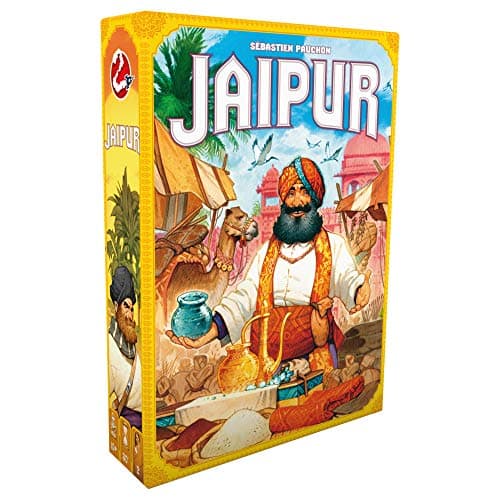
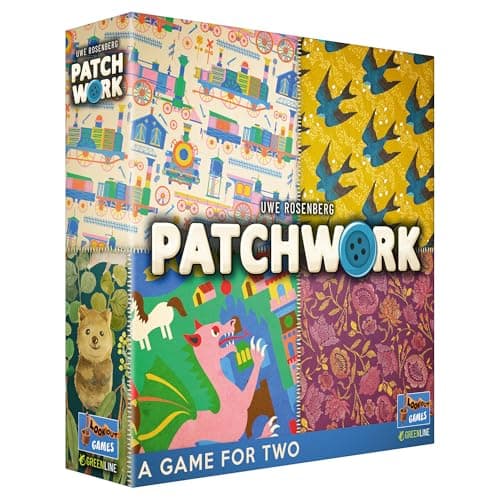
Games with one core action are ideal for the start-before-explaining approach, because there is almost nothing to hold back. Jaipur: take goods or sell goods. Patchwork: buy a patch or move past your opponent. Lost Cities: play a card, draw a card.
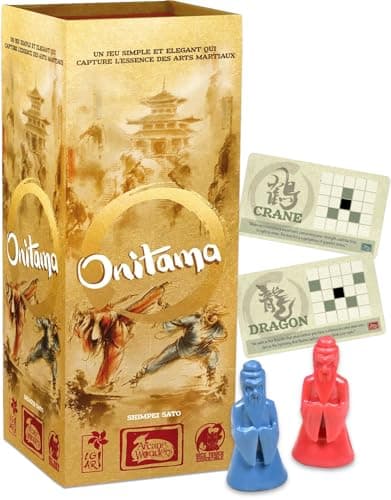
Onitama is the extreme case -- move according to a card, then hand that card to your opponent -- and can genuinely be taught in under two minutes with no open-handed game needed.
Games with a symbol language, 7 Wonders Duel most of all, resist this method. You cannot teach the symbols as they come up, because they all come up at once on the first row of cards. Save that one for later.
What we would buy
Picks drawn from the games covered on this site, chosen against the criteria above.
We earn a commission when you buy through links on this page, at no extra cost to you. It does not change which games we recommend or what we say about them. How this site is funded.
Perfect information, sixteen move cards, and a rules explanation that takes under two minutes.
A two-player-only abstract on a 5x5 grid. Five move cards are in play at once and they physically pass between the two of you, so arming yourself always arms the opponent.
Players
2
Playing time
15 minutes
Age
14+
Publisher
Arcane Wonders
Who should skip it
Skip it if you dislike losing to a mistake you can see clearly in hindsight. Nothing is hidden, so every loss is yours.
The best first two-player card game there is: five minutes to teach, and it keeps giving for years.
A two-player-only trading card game. You collect and sell goods in sets, racing the other trader for bonus tokens that shrink as they are taken. Best of three rounds decides it.
Players
2
Playing time
30 minutes
Age
10+
Designer
Sebastien Pauchon
Publisher
Asmodee / GameWorks
Published
2009
Who should skip it
Skip it if you want a board on the table. This is cards and tokens, and it looks slight next to a game with a map.
The gentlest good game on this site. Two quilts, no attacking, and a surprisingly sharp puzzle underneath.
A two-player-only tile-laying game. You buy fabric patches on a shared time track and fit them onto a personal 9x9 quilt board, paying with buttons and with time.
Players
2
Playing time
about 30 minutes
Age
8+
Designer
Uwe Rosenberg
Publisher
Lookout Games
Published
2014
Who should skip it
Skip it if you want to interact. You are mostly solving your own board, and the only contact is who takes which patch first.
Play the first game open-handed with your cards visible, explain what you do on a turn before you explain scoring, and start playing after about three sentences rather than finishing the rulebook.
+−Should you explain the whole rulebook first?
No. If a rule will not come up in the first three turns, leave it. At two players you can pause and explain in ten seconds without holding up a table.
+−What is the best game to teach a complete beginner?
Onitama can genuinely be taught in under two minutes. Jaipur, Patchwork and Lost Cities all teach in about five and have more staying power.
+−Should I correct their mistakes while teaching?
Sparingly. One suggestion per game is plenty. Correcting every suboptimal move turns the game into a test, which is the fastest way to make someone not want a second one.