Lost Cities is the closest game to Jaipur and the one to buy next: Reiner Knizia's two-player card game, published for exactly 2 at 30 minutes, built on the same decision about when to commit. Buy The Fox in the Forest if you want cards doing something different, Splendor Duel if you want real depth, and Azul if what you now want is a game that seats more than two.
We earn a commission when you buy through links on this page, at no extra cost to you. It does not change which games we recommend or what we say about them. How this site is funded.
Jaipur is the game this site recommends most often as a first purchase for two people, which makes "what do we buy after it?" the question that follows most often. It is also a question with four reasonable answers, because people like Jaipur for four different reasons and only one of them is really about trading goods.
Some liked the timing decision -- the bonus tokens shrink as they are taken, so selling early is safe and selling late is worth more until suddenly it is not. Some liked that it is cards and tokens with no board to find space for. Some liked that it starts in five minutes. And some have hit its one real limit, which is that it is published for exactly two people and will never seat a third.
So this page sorts by the part you liked rather than handing you a ranking, which is the same approach we take on games like 7 Wonders Duel and games like Azul. We have not played any of these; specifications come from each publisher's page or the game's reference entry, cited at the bottom.
01
First, which part of Jaipur did you actually like?
Four axes. Being honest about which one applies is most of the work, because two of them point away from card games entirely.
The timing. Jaipur's engine is that you collect goods in sets and sell them, and the bonus tokens for selling multiples shrink as they are taken. Holding a set to sell bigger is the whole game, and so is the moment you discover the other trader has just taken the token you were waiting on. If this is what you liked, you liked a push-your-luck economy, and camels and spices were set dressing.
The format. Cards and tokens, no board, nothing to set up beyond a row of goods. If this is what you liked, you want another game of that shape, and there are three good ones here.
The teach. Asmodee and GameWorks publish it for exactly 2 players at 30 minutes, rated 10+, and it genuinely starts inside five minutes with a first game that counts rather than a practice round. If this is what you liked, be careful of being sold up into something heavier because it is deeper -- depth you do not reach is not worth paying for.
The player count, in reverse. Jaipur is Built for two on this site's labeling: the publisher states exactly 2 and nothing scales. If the limit has started to bite, that changes the recommendation completely, and the section near the end is for you.
02
The closest game to Jaipur: Lost Cities
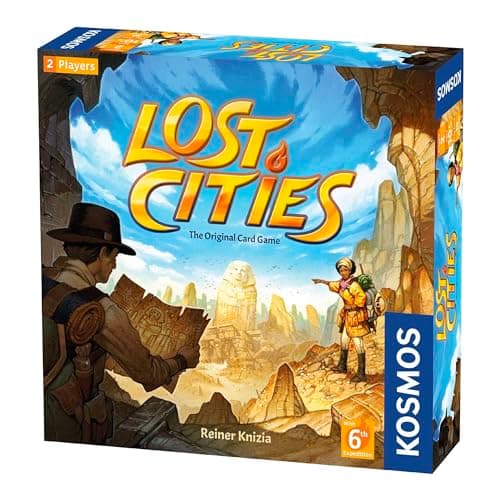
If you only want one recommendation, this is it. Reiner Knizia designed Lost Cities in 1999 and Kosmos and Rio Grande Games publish it for exactly 2 players at 30 minutes, rated 10 and up. It is the other all-time great two-player card game, and it sits beside Jaipur on almost every shortlist for a reason.
The reason is that it asks the same question in a different costume. You mount expeditions in five colors, and every card you play on a color must be higher than the last one you played there. Start an expedition and you are committed: score it properly and it pays, abandon it part-built and it goes negative. Like Jaipur, the decision is never what to play but when to commit, and like Jaipur you are watching the other person to work out what they are waiting for.
It is also the cheapest game on this page by a clear margin, which matters more than it sounds when the thing you are buying is a second light card game rather than a centerpiece.
The honest downsides. It is a harsher game than Jaipur -- going negative on an abandoned expedition feels worse than missing a bonus token, and some pairs find that sour rather than tense. It is older and looks it. And the two games are close enough that owning both can feel redundant if what you wanted was variety rather than another of the same thing. We compare them head to head separately, and that comparison is the most-read thing on this site.
03
Cards, doing something completely different: The Fox in the Forest
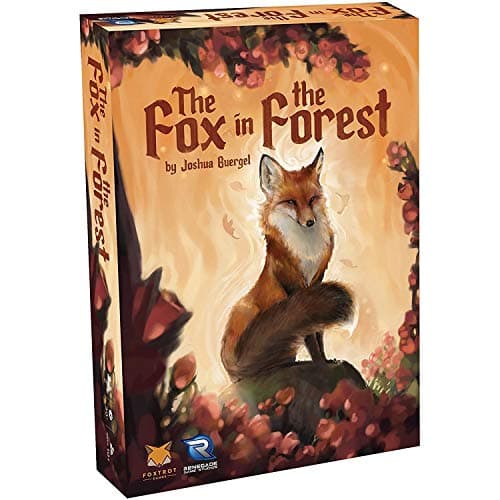
If what you liked was the card format but you want a different kind of thinking, this is the pick. Joshua Buergel designed it and Foxtrot Games and Renegade Game Studios publish it for exactly 2 players at 30 minutes, rated 10+.
It is a trick-taking game for two, which is a genuinely odd achievement -- trick-taking normally needs three or more players to work at all, and most two-player versions of it are compromises. This one is not. The twist is that winning too many tricks makes you greedy and scores you nothing, so the game is about landing inside a narrow band rather than taking as much as possible. On top of that, the odd-numbered cards each break a rule when played.
That makes it the best choice on this page for a pair who want their second game to feel unlike their first. Jaipur is about accumulating and timing; this is about restraint and about reading how close your opponent is to overshooting.
The honest downsides. The scoring band takes a game or two to internalize, so unlike Jaipur your first play probably is a practice round. The rule-breaking odd cards mean there is a reference you will be checking early on. And if one of you dislikes trick-taking as a family of games, nothing here will change that -- the theme is charming but the skeleton is still a trick-taking game.
04
The same squeeze with real depth: Splendor Duel
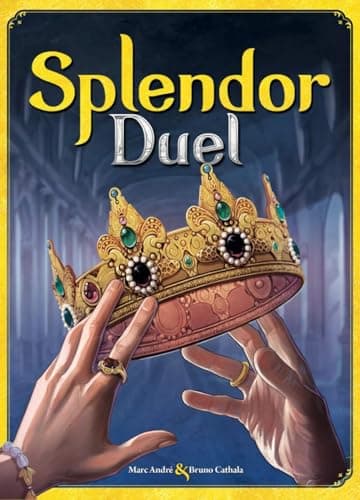
If Jaipur's economy was the appeal and you want more of it rather than something lighter, Splendor Duel is the upgrade. Bruno Cathala and Marc Andre designed it and Space Cowboys publish it for exactly 2 players at 30 minutes, rated 10+.
The structural link to Jaipur is the restricted supply. Twenty-five gem tokens sit on a shared grid and you may only take up to three that form an uninterrupted line, so what you want is frequently not what you are allowed to have, and taking what you can reach changes what the other person can reach next. That is the same species of squeeze as racing someone for a shrinking bonus token.
Where it goes further is that it builds. Cards you buy leave permanent discounts behind, so by the end you are buying things that were unreachable at the start, and three victory conditions run from the first turn -- any of which ends the game the instant it is met, with no final scoring round. Jaipur ends tidily after a best-of-three; this one can stop while your plan is still a turn away.
The honest downsides. It is the heaviest teach of the five and tracking three live win conditions takes a couple of games. It punishes inexperience more than Jaipur does, because knowing which early purchases compound is most of the skill, so a lopsided pair will get lopsided results. And it is a board and tokens rather than a deck, so it loses Jaipur's packability.
05
If you now want more than two players: Azul
This is the one axis where the honest answer is to leave the two-player shelf, and it comes up often enough to deserve its own section. Jaipur is published for exactly two and there is no variant, no dummy hand and no official way to seat a third.
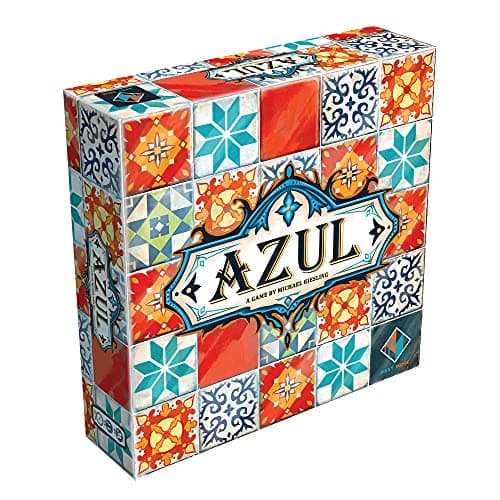
Azul is the game we would buy for that. Michael Kiesling designed it, Plan B Games published it in 2017 for 2-4 players at 30-45 minutes, and it won the 2018 Spiel des Jahres along with five other major awards. It keeps the two things that make Jaipur easy to get agreed to -- light rules and a short teach -- while seating up to four when someone else turns up.
It also keeps the greed problem, which is the real reason it belongs on this page. You take every tile of one color from one supply, all of them, whether or not you can use them, and whatever will not fit is discarded at a cost in points. Taking what you need while taking more than you can place is recognizably the same tension as holding a set too long in Jaipur.
The honest downsides. It is a board game rather than a card game, so the footprint and the setup both grow. No reachable source states an age rating for it -- Plan B Games' own site now redirects elsewhere and Asmodee's page renders empty -- so if you are buying with a specific child in mind, read the box rather than this page. And on this site's labeling it is Plays at two rather than Built for two, which is the whole point of recommending it here but is worth saying plainly.
06
The smallest and cheapest step sideways: Love Letter
Worth naming because "something like Jaipur but even smaller" is a real request, usually from someone who liked that Jaipur travels. Seiji Kanai designed Love Letter and Alderac Entertainment Group, then Z-Man Games, publish it; the second edition is listed at 2 to 6 players at 20 minutes.
It is a microgame and it sharpens at two rather than merely tolerating it. You hold one card, draw a second and play one, deducing what the other person is holding from what they discard. With one opponent the deck becomes countable and it turns into a deduction duel rather than the party filler it can be with five.
It is the cheapest thing on this page and the most portable by a distance, so it is the honest answer if the brief is "another one for the bag" rather than "another real game for the table".
The honest downsides, and they are real. It is a filler, not a main event -- a round takes minutes and a bad draw can end yours immediately, which is fine in context and maddening if you expected Jaipur's arc. The publisher's listing is 2 to 6 rather than exactly 2, so it is Plays at two here. And no age rating is stated by a source we can reach, so we do not print one.
07
What Jaipur does that none of these replace
A short honest section, because a next-buy guide that implies the first game is used up is selling rather than advising.
Nothing on this page matches Jaipur's combination of a five-minute teach with a first game that genuinely counts. Lost Cities is as quick to explain but harsher. The Fox in the Forest needs a practice round. Splendor Duel needs two or three. Azul is as light but larger on the table. That combination is why Jaipur remains our first recommendation for a pair who have never bought a game together, and buying a second game does not demote it.
There is also no Jaipur expansion. We checked, and there is no expansion product for it to buy, so the only way to add to Jaipur is to add a different game -- which is what this page is for.
And if your honest answer to "which part did you like?" is "all of it, and we play it twice a week", the most useful thing we can tell you is that you do not need to buy anything. A two-player game that is still getting played is doing its job, and the best time to buy the next one is when you notice yourselves reaching past it.
08
Who each pick is for
Lost Cities -- best for the pair who liked deciding when to commit and want another quick card game of the same class. Built for exactly two, 30 minutes, ages 10 and up, and the cheapest real game here. Downside: harsher than Jaipur, since an abandoned expedition scores negative, and it is close enough to Jaipur that owning both can feel like one game twice.
The Fox in the Forest -- best for the pair who liked the card format and want their second game to feel nothing like their first. Built for exactly two, 30 minutes, 10+, trick-taking that actually works at two. Downside: the scoring band and the rule-breaking odd cards mean a real learning game first.
Splendor Duel -- best for the pair who liked the economy and want depth rather than another light one. Built for exactly two, 30 minutes, 10+, with a compounding engine and three live win conditions. Downside: the heaviest teach here, unforgiving of a skill gap, and it needs table space.
Azul -- best for the pair who have hit Jaipur's two-player ceiling and want a light game that seats up to four. 2-4 players, 30-45 minutes, Spiel des Jahres winner. Downside: a bigger footprint than a deck of cards, and no reachable source states its age rating.
Love Letter -- best for the pair who want the smallest, cheapest thing that still plays well at two. Listed 2 to 6, 20 minutes, and the most portable game we cover. Downside: it is a filler rather than a main event, and no age rating is stated anywhere we can cite.
Buy nothing yet -- best if Jaipur is still getting played twice a week. The right moment for the next game is when you notice yourselves reaching past this one, not before.
What we would buy
Picks drawn from the games covered on this site, chosen against the criteria above.
We earn a commission when you buy through links on this page, at no extra cost to you. It does not change which games we recommend or what we say about them. How this site is funded.
Lost Cities
Built for two2 players · 30 minutes · ages 10 and up
Old enough to vote and still the cleanest press-your-luck card game for two.
A two-player-only card game about mounting expeditions. Every card you play must be higher than the last on that color, so committing early is how you score and also how you go negative.
Players
2
Playing time
30 minutes
Age
10 and up
Designer
Reiner Knizia
Publisher
Kosmos / Rio Grande Games
Published
1999
Who should skip it
Skip it if a run of bad draws will sour the evening. The cards decide more here than in anything else we recommend.
A trick-taking game for two that actually works, which almost no trick-taker manages.
A two-player-only trick-taking card game. Winning too many tricks makes you greedy and scores nothing, so the game is about landing in a narrow band -- and odd-numbered cards each break a rule.
Players
2
Playing time
30 minutes
Age
10+
Designer
Joshua Buergel
Publisher
Foxtrot Games / Renegade Game Studios
Published
2017
Who should skip it
Skip it if neither of you has played a trick-taking game before. The scoring rewards losing on purpose, and that lands badly cold.
The gentler duel: an engine builder where you are racing rather than attacking, and the shared gem board is the whole game.
A two-player-only engine-building game in the Splendor universe. You draft gem tokens from a shared board to buy Jewel cards across three levels, chasing three separate victory conditions -- points, a color majority, or crowns. 67 Jewel cards, 25 tokens, 3 Privilege scrolls, 4 Royal cards.
Players
2
Playing time
30 minutes
Age
10+
Designer
Bruno Cathala and Marc Andre
Publisher
Space Cowboys
Published
2022
Who should skip it
Skip it if you want direct conflict. The tension is in what you take from the shared board before the other person can, never in anything you do to their cards.
Five major awards in 2018, and a draft where you must take every tile of the color you want -- including the ones you cannot use.
A tile-drafting game for 2-4 players. You take every tile of one color from a shared supply and arrange them in rows, then move one tile from each filled row onto a 5x5 board where it scores by where it sits relative to the others. Rounds continue until a player completes a row across their board, with bonuses for complete rows, columns and full color sets. Designed by Michael Kiesling, published by Plan B Games in 2017.
Players
2-4
Playing time
30-45 minutes
Designer
Michael Kiesling
Publisher
Plan B Games
Published
2017
Who should skip it
Skip it if you want a game built only for two. Plan B Games lists 2-4, and a two-player-only Azul exists separately as Azul Duel.
Plays at two2 to 6 (Second Edition) players · 20 minutes
The smallest game we recommend, and at two it becomes a tight deduction duel rather than a party filler.
A supports-more microgame that sharpens at two. You hold one card, draw a second, and play one -- deducing what the other person is holding from what they discard.
Players
2 to 6 (Second Edition)
Playing time
20 minutes
Designer
Seiji Kanai
Publisher
Alderac Entertainment Group, then Z-Man Games
Published
2012
Who should skip it
Skip it if you want a main event. This is a five-minute game you play four times, not an evening.
Lost Cities. Reiner Knizia's two-player card game is published for exactly 2 players at 30 minutes and is built on the same decision Jaipur is -- when to commit rather than what to play. It is also the cheapest of the games on this page.
+−Is there a Jaipur expansion?
No. There is no expansion product for Jaipur, so the only way to add to it is to buy a different game. For comparison, 7 Wonders Duel has two expansions and Splendor Duel has one, and we cover both of those separately.
+−Are there card games like Jaipur for two players?
Three that we cover: Lost Cities (expedition building, exactly 2 players, 30 minutes), The Fox in the Forest (trick-taking that works at two, exactly 2 players, 30 minutes) and Love Letter (a microgame listed 2 to 6 that sharpens at two). If you simply want the card format ranked as a category, our best two-player card games roundup does that instead.
+−What is like Jaipur but for more players?
Azul. Plan B Games publishes it for 2-4 players at 30-45 minutes, it keeps Jaipur's light rules and short teach, and its central rule -- take every tile of one color, including the ones you cannot use -- creates a similar greed problem. Jaipur itself is published for exactly two and has no variant for three.
+−Does Jaipur have a solo mode?
No solo mode is stated by its publisher. Of the games we cover, only Gloomhaven: Jaws of the Lion has a publisher-stated minimum of one player.
+−Is Jaipur or Lost Cities better?
Jaipur is the friendlier of the two and the better first purchase; Lost Cities is sharper and cheaper, and it punishes a half-built expedition with negative points. They are close enough that most pairs are happy owning one. We judge them against each other in a separate head-to-head.
+−Do I need to buy another game after Jaipur?
Not if it is still getting played. Jaipur holds up for years, and the honest moment to buy the next game is when you notice yourselves wanting something it cannot do -- more depth, a different kind of thinking, or a third seat at the table.