Sky Team is the best asymmetric two-player game: Le Scorpion Masque publishes it for exactly 2 players at 15 minutes, one of you is the pilot and one the co-pilot, and neither may discuss the dice they are holding. Undaunted: Normandy is the competitive pick, and Codenames: Duet puts the asymmetry in what you each know.
We earn a commission when you buy through links on this page, at no extra cost to you. It does not change which games we recommend or what we say about them. How this site is funded.
Most two-player games are mirrors. Both of you start with the same pieces, the same options and the same goal, and the only difference is what you do with them. That is a perfectly good design and several of the best games on this site work exactly that way.
Asymmetric games break the mirror on purpose. Your side has different units, a different job, a different piece of the information or a different way of winning, so the two of you are not really playing the same game at the same table -- you are playing two games that collide.
That matters more at two than anywhere else, because there is nobody else at the table to compare yourself to. This page ranks the four we cover, and it separates the two kinds of asymmetry that usually get confused with each other.
Quick picks
#
Game
Players
Time
Price
1
Sky Team
A fifteen-minute co-op you play in near silence, and the tension is extraordinary.
Player counts and playing times come from each publisher, cited on that game's review page. Tap a row to jump to the full write-up.
01
The two kinds of asymmetry, and why the difference matters
Asymmetric sides means the components differ. One of you commands American forces and one German, or one of you is the pilot and one the co-pilot, and the pieces in front of you do things the other person's pieces cannot. The asymmetry is physical and visible from across the table.
Asymmetric information means the components match but what you know does not. Codenames: Duet is the clean example: you each see half of a shared key card, so what makes the game hard is not your pieces but the gap between what you can see and what your partner can.
If you want the asymmetry to be the reason you buy the game, take the first kind -- it is more dramatic, and learning your own side is most of the fun across repeat plays. If you want asymmetry in a game that packs small and teaches in five minutes, take the second.
02
What we judged on
Four criteria, in this order.
Is the asymmetry structural or cosmetic? A game whose two sides have different art and identical rules is not on this list. Every pick here changes what a player is allowed to do, not just how their side looks.
Is it balanced enough to replay? Asymmetric games are harder to balance than mirrors, which is why the competitive picks here are scenario-driven: you swap sides and play again, and the scenario rather than the box carries the balance.
Does the quieter side still have a game? This is where most asymmetric designs fail at two. If one role mostly reacts, the person stuck with it stops enjoying it by the third session.
Teach time, because asymmetry doubles the teach. You are explaining two roles, not one. Sky Team manages it in minutes; Undaunted takes a scenario.
03
Who each pick is for
One line each.
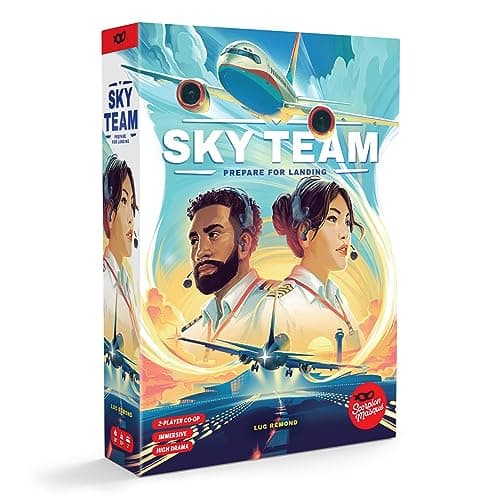
Sky Team -- best for the pair who want the asymmetry to be about pressure rather than armies. Le Scorpion Masque publishes it for exactly 2 players at 15 minutes, ages 12+: one pilot, one co-pilot, dice placed on a shared cockpit board, and no discussing what you hold.
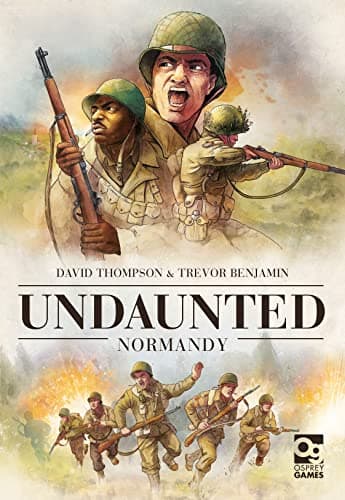
Undaunted: Normandy -- best for two people who want genuinely different forces to command. Osprey publishes it for exactly 2 at 45 to 60 minutes, ages 14+. One side is American, one German, and the scenario sets what each has to achieve.
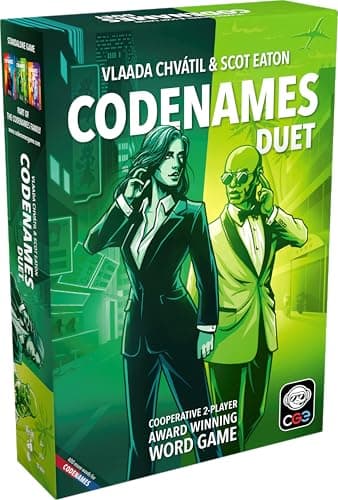
Codenames: Duet -- best for the household that wants asymmetric information in a fifteen-minute box. Czech Games Edition lists it as 2+ rather than two only, but the two-sided key card -- you each see half -- is the asymmetry, and it is built around a pair.
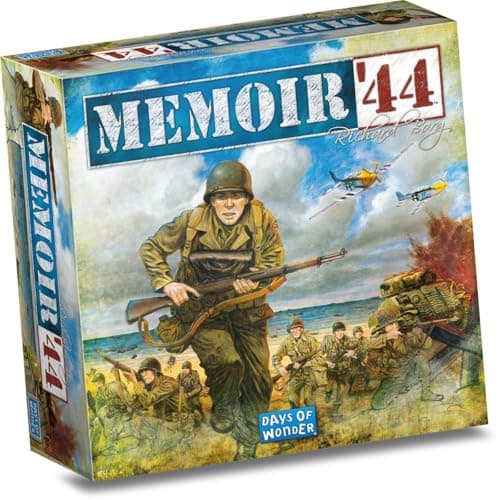
Memoir '44 -- best for the pair who want the asymmetry to change every session. Days of Wonder publishes it for 2 to 4 at 30 to 45 minutes, ages 8+, and each scenario gives the Axis and Allied commanders different units and different objectives on the same hex battlefield.
04
The game we would have ranked first, and cannot
Watergate is the most asymmetric game on this site. One player is the Nixon administration and one is the Washington Post, the two sides want different things from the same board, and they do not even win in the same way.
It is not ranked on this page because we cannot currently verify that it is purchasable: its listing has returned no item record on every daily check for more than five weeks. We do not put a buy button on a page for a product we cannot confirm is in stock, and we are not going to quietly leave the best answer off the page either.
Its review on this site stays up and says the same thing. If the listing comes back -- three other products here have, after waits of seven and eight weeks -- it belongs at the top of this list and will be added.
05
Asymmetry is a teaching cost as well as a feature
Worth saying plainly, because asymmetric games are usually recommended without it. When the two sides differ, somebody has to explain both of them before the first turn, and the person being taught is learning a role they will not play that evening as well as the one they will.
The practical consequence is that asymmetric games reward households that replay the same game. A second session of Sky Team or Undaunted is substantially better than the first, because by then both of you know what the other side can do and can anticipate it. If your pattern is to play a game once and move on, a mirrored game will give you more for that single evening.
The exception is Codenames: Duet, which is asymmetric in information only. Both players follow the same short rules, so the teach is one explanation rather than two, and it is the only pick here we would put in front of someone who has never played a modern board game.
06
Who takes which side, and why it matters more at two
In a four-player game a badly matched role is diluted: there are other people to carry the table. At two, if one of you is stuck in the seat that does not suit them, that is the entire evening.
The rule we would use is to assign by temperament rather than by experience. In Sky Team the two seats make different demands -- one of them is more about holding a plan while the other acts on it -- so the person who finds silent pressure exciting and the person who finds it stressful should not be allocated at random. The same goes for the Undaunted sides: scenarios routinely give one commander the attacking job and the other the job of not losing, and those are different kinds of evening.
The second rule is to swap. Every competitive game here is scenario-driven, which means replaying the same scenario with the sides reversed is not merely allowed, it is how you find out whether a result came from the position or the player. A pair who always take the same side will spend months mistaking one for the other.
The third is the one people skip: if one side keeps winning in your house and neither of you is enjoying that, the fix is a different scenario rather than a different game. These boxes ship with a list of them, and the balance lives in that list rather than in the rules.
The cooperative picks need the same conversation for a different reason. In Sky Team and Codenames: Duet nobody loses to the other person, so the risk is not resentment but drift -- one player gradually takes over both halves of the decision and the other stops contributing. The structure fights this: Sky Team forbids you from saying what you hold, and Duet physically gives each of you half the key. That is exactly why those two work where a cooperative game with open information often does not.
07
What we did instead of playing these
We have not played these games. Player counts, playing times, ages and role descriptions come from Le Scorpion Masque, Osprey Games, Czech Games Edition and Days of Wonder -- the publishers' own pages, all reachable and all linked below.
The buy buttons carry live pricing with the date it was checked. No prices appear in this prose, and nothing on this site carries a score out of ten.
A fifteen-minute co-op you play in near silence, and the tension is extraordinary.
A two-player-only cooperative game. One of you is pilot, one is co-pilot, and you land an aircraft by placing dice on a shared cockpit board -- without discussing which dice you hold.
Players
2
Playing time
15 minutes
Age
12+
Designer
Luc Remond
Publisher
Le Scorpion Masque
Published
2023
Who should skip it
Skip it if you want to talk freely. The no-talking restriction is the whole game, and some pairs find that frustrating rather than thrilling.
The best two-player war game in print, and the only one on this list that teaches deck-building and squad tactics at the same time.
A two-player-only deck-building war game. Each side commands American or German forces across a campaign of World War II scenarios, with 108 cards, 18 large map tiles, dice and tokens. Your deck is your squad, and losses thin it permanently.
Players
2
Playing time
45-60 minutes
Age
14+
Designer
David Thompson and Trevor Benjamin
Publisher
Osprey Games
Published
2019
Who should skip it
Skip it if losing a unit permanently for the rest of a scenario will frustrate you. Casualties remove cards from your deck, so a bad turn keeps costing you.
Built around two people and honest about it, though the publisher lists it as 2+ rather than two only.
A cooperative word-association game. You each see half of a shared key card and give one-word clues to guide the other to the right agents in a 5x5 grid, avoiding the assassin.
Players
2+
Playing time
15 minutes
Age
11+
Designer
Vlaada Chvatil and Scot Eaton
Publisher
Czech Games Edition
Who should skip it
Skip it if one of you thinks in wildly different associations from the other. That gap is funny once and exhausting by the fourth game.
The most approachable historical war game in print, because a hand of command cards does the work a rulebook would otherwise do.
A supports-more historical war game that plays at two. You command Axis or Allied forces on a hex battlefield split into three sections, and the command cards in your hand decide which section you can give orders to each turn. 144 army miniatures, 44 double-sided terrain tiles, 60 command cards, 8 attack dice and a scenario book.
Players
2-4
Playing time
30-45 minutes
Age
8+
Designer
Richard Borg
Publisher
Days of Wonder
Published
2004
Who should skip it
Skip it if you want a game built only for two. Days of Wonder lists 2-4 players, and the famous Overlord scenarios need a second copy of the box.
+−What is the best asymmetric board game for 2 players?
Sky Team. It is published for exactly 2 players at 15 minutes, ages 12+, with one pilot and one co-pilot placing dice on a shared cockpit board, and the ban on discussing the dice you hold is what turns two different roles into real tension.
+−What does asymmetric mean in a board game?
That the two sides are not mirrors. Either the components and abilities differ -- different armies, different roles -- or the information does, as in Codenames: Duet where each player sees half of a shared key card. Both change what a player is allowed to do, not just how their side looks.
+−Are asymmetric games harder to learn?
Usually, because somebody has to explain both sides before the first turn. Budget one extra teaching session. Codenames: Duet is the exception here: the rules are identical for both players and only the information differs, so it is one short explanation.
+−Is Memoir '44 good with two players?
It is built around a commander on each side, so two is its natural count. Days of Wonder lists 2 to 4, and the large Overlord scenarios need a second copy of the box -- so if two is all you will ever play, you are buying the part of the game that matters and ignoring the rest.
+−Why is Watergate not on this list?
Because we cannot currently verify that it is purchasable. Its listing has returned no item record for more than five weeks of daily checks, and we do not rank a product we cannot confirm is in stock. It is the most asymmetric game we cover, and its review stays up.
+−Do both players enjoy asymmetric games equally?
Only if both roles have decisions, which is the criterion we rank on -- the common failure is a side that mostly reacts. In Sky Team both seats hold dice they must place and cannot explain; in Undaunted both commanders have an objective the scenario sets.