The best two-player board games for non-gamers are Jaipur, Codenames: Duet, Patchwork and Lost Cities. Each teaches in five minutes or less, has a theme that needs no explanation, and does not feel like homework. Three of the four are published for exactly two players.
We earn a commission when you buy through links on this page, at no extra cost to you. It does not change which games we recommend or what we say about them. How this site is funded.
A non-gamer is not someone who cannot play board games. It is someone who has agreed to, as a favor, and who will quietly stop suggesting it if the first evening feels like work.
That changes what matters. Depth is nearly irrelevant. What decides whether there is a second game is how long the first explanation took, whether the theme made sense without a paragraph, and whether the loss felt personal. This page picks on exactly those three things.
01
The three things that decide it
Teach time under five minutes. This is the whole ballgame. The explanation is when the other person decides whether this is fun or an obligation, and that decision is nearly irreversible. Every pick here is one core action, explained in a sentence.
A theme that explains itself. Trading goods in a market, guessing words, sewing a quilt, mounting expeditions. Nobody needs a paragraph to understand what they are doing. A game with a fantasy economy or a symbol language fails here regardless of quality.
A loss that is not personal. Games where you attack each other can make a reluctant player feel targeted. Two of the picks below have no direct conflict, and the two that compete do it indirectly.
02
Why each pick works
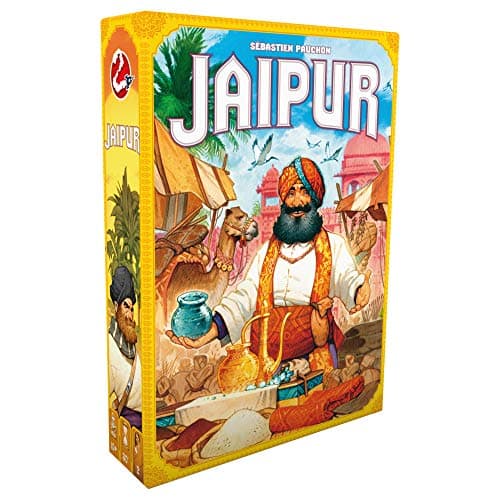
Jaipur is the safest first purchase on this site for anyone, and it is the safest here by a wider margin. Take goods or sell goods, sets are worth more, best of three. No attacking at all -- you race for the same tokens but never touch each other's cards. Two players, 30 minutes.
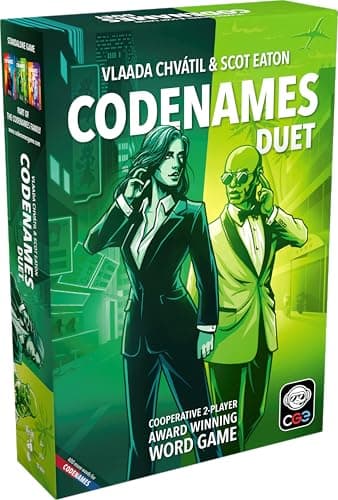
Codenames: Duet is the pick if your partner would rather talk than play. The game is the conversation about whether a clue was fair, and there is no board to optimize. The publisher lists it at 2+, not exactly 2, but it is designed around a pair. Fifteen minutes.
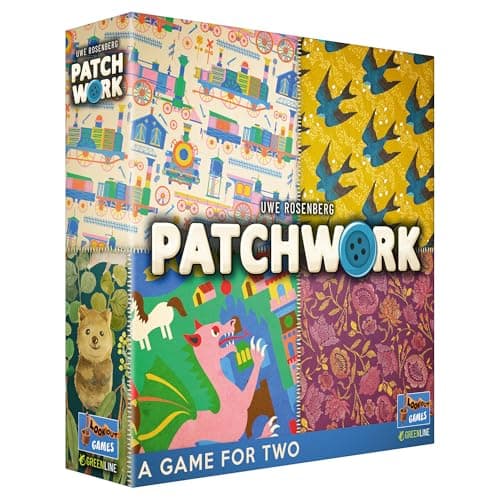
Patchwork is for the partner who is wary of competing at all. You each build your own quilt, and nothing the other person does can damage yours. The rules are one action. Two players, about 30 minutes, rated 8+.
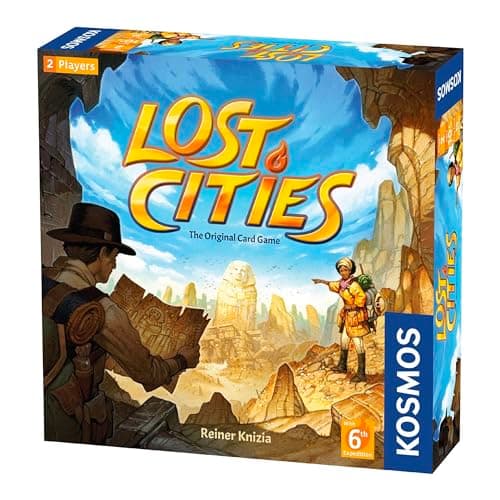
Lost Cities is the one with a little more bite, for a non-gamer who turns out to enjoy a gamble. Every expedition starts at minus twenty, and the draw decides enough that the newer player wins real games. Two players, 30 minutes, teaches in five.
03
What not to buy for a non-gamer
Not 7 Wonders Duel, however good it is. The card symbols are a small language and the first game runs long with a rulebook on the table. It is the most common way a reluctant partner decides board games are not for them.
Not anything with a campaign. A run of evenings in sequence is the opposite of a low-commitment favor.
Not a bundle. Three games arriving at once reads as a project. One game, played a few times, reads as an evening.
04
How to suggest it, and how to tell if it is working
The suggestion matters as much as the game. Do not frame it as a new hobby, a thing you have been reading about, or something you would love them to get into. Frame it as twenty minutes, tonight, and then we will watch the thing we were going to watch. A low-stakes ask gets a yes; an enthusiastic one gets a polite deferral.
Then watch for two signals, because they tell you which game to buy next or whether to stop. If they ask to play again the same evening, you have found the right game and the right person -- buy nothing else for a month and let it become a habit. If they finish politely and change the subject, do not push a second game that night, and do not try a different game next time. Try the same one again in a week, when the rules are no longer new. The second play of a game is almost always more fun than the first, and a lot of non-gamers never get there because someone rushed them onto a third box.
The one hard stop: if the second play is also a polite finish, stop. Some people genuinely do not enjoy this, and pressing on turns a pleasant evening into a recurring negotiation. The games on this list are chosen to give the best possible chance; they are not a guarantee, and pretending otherwise is how the hobby gets a reputation for being pushy.
05
How to run the first evening
Play the first game with your cards face up and talk through your reasoning. At two players there is no fairness cost, and it is the fastest way to teach anything. Do not explain the scoring before the first turn -- play three turns, then explain scoring once they can see what it describes.
Do not oversell it, do not apologize for it, and do not teach it at 11pm at the end of a long day. Stop after one game if that is what they want. The goal is not a good evening. It is the second one.
06
What we did instead of playing these
We have not played these games. What we did: took the player count, playing time and age from each publisher's page or the game's reference entry, and chose on teach time, theme legibility and conflict rather than on depth. Every figure links to its source below.
What we would buy
Picks drawn from the games covered on this site, chosen against the criteria above.
We earn a commission when you buy through links on this page, at no extra cost to you. It does not change which games we recommend or what we say about them. How this site is funded.
The best first two-player card game there is: five minutes to teach, and it keeps giving for years.
A two-player-only trading card game. You collect and sell goods in sets, racing the other trader for bonus tokens that shrink as they are taken. Best of three rounds decides it.
Players
2
Playing time
30 minutes
Age
10+
Designer
Sebastien Pauchon
Publisher
Asmodee / GameWorks
Published
2009
Who should skip it
Skip it if you want a board on the table. This is cards and tokens, and it looks slight next to a game with a map.
Built around two people and honest about it, though the publisher lists it as 2+ rather than two only.
A cooperative word-association game. You each see half of a shared key card and give one-word clues to guide the other to the right agents in a 5x5 grid, avoiding the assassin.
Players
2+
Playing time
15 minutes
Age
11+
Designer
Vlaada Chvatil and Scot Eaton
Publisher
Czech Games Edition
Who should skip it
Skip it if one of you thinks in wildly different associations from the other. That gap is funny once and exhausting by the fourth game.
The gentlest good game on this site. Two quilts, no attacking, and a surprisingly sharp puzzle underneath.
A two-player-only tile-laying game. You buy fabric patches on a shared time track and fit them onto a personal 9x9 quilt board, paying with buttons and with time.
Players
2
Playing time
about 30 minutes
Age
8+
Designer
Uwe Rosenberg
Publisher
Lookout Games
Published
2014
Who should skip it
Skip it if you want to interact. You are mostly solving your own board, and the only contact is who takes which patch first.
Built for two2 players · 30 minutes · ages 10 and up
Old enough to vote and still the cleanest press-your-luck card game for two.
A two-player-only card game about mounting expeditions. Every card you play must be higher than the last on that color, so committing early is how you score and also how you go negative.
Players
2
Playing time
30 minutes
Age
10 and up
Designer
Reiner Knizia
Publisher
Kosmos / Rio Grande Games
Published
1999
Who should skip it
Skip it if a run of bad draws will sour the evening. The cards decide more here than in anything else we recommend.
+−What is the best two-player board game for someone who does not like board games?
Jaipur. It teaches in about five minutes, the theme explains itself, and there is no attacking -- you race for the same tokens without touching each other's cards. Published for exactly 2 players at 30 minutes.
+−What should I avoid buying for a non-gamer?
Anything with a symbol language or a long first game, 7 Wonders Duel included, and anything with a campaign. Also avoid buying several games at once -- it reads as a project rather than an evening.
+−Is Codenames: Duet good for non-gamers?
Yes, especially for a partner who would rather talk than play. The conversation is the game. Note the publisher lists it at 2+ rather than exactly two.
+−How do I teach a game to a reluctant partner?
Play the first game open-handed, explain the action before the scoring, start after three sentences rather than finishing the rulebook, and never teach at the end of a long day.