Yes -- Azul works well at two players, and two is the tightest way to play it, because with one opponent you can read exactly what they are forced to take next. But Plan B Games published it for 2-4, not for two, and since 2025 there is a separate Azul Duel built for exactly two players. If the two of you are the only people who will ever play it, buy Azul Duel instead.
We earn a commission when you buy through links on this page, at no extra cost to you. It does not change which games we recommend or what we say about them. How this site is funded.
This is one of the most-asked questions about any game we cover, and it usually gets answered badly -- either a flat "yes, it's great at two!" that ignores what the box says, or a dismissal that ignores how well the draft actually works with one opponent. Both are wrong in different directions.
The useful answer has three parts: what the publisher actually states, what genuinely changes at two players, and -- the part that is new as of 2025 and that most answers have not caught up with -- the fact that there is now an Azul designed specifically for two, which makes this a choice rather than a compromise.
We have not played either game. What follows is built from the publisher's own figures, the games' reference entry and a rules reproduction, all cited at the bottom, plus the labeling rule this whole site is organized around.
01
The short answer, and the specs behind it
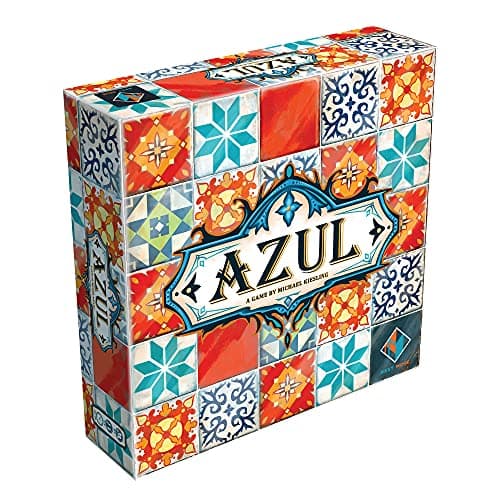
Azul -- 2-4 players, 30-45 minutes. Michael Kiesling, Plan B Games, 2017. Winner of the 2018 Spiel des Jahres. No reachable source states an age rating. Works at two; not designed for two.
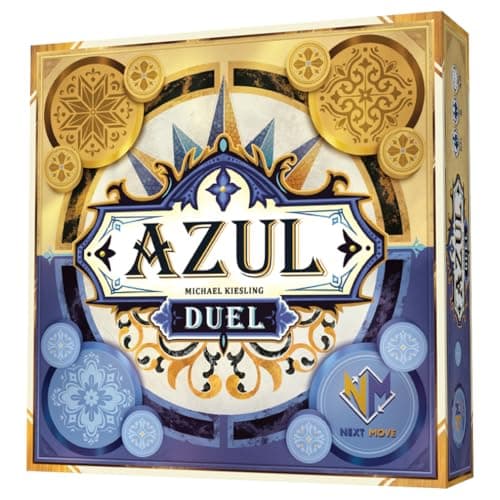
Azul Duel -- exactly 2 players, 45 minutes, ages 10+. Next Move Games, 2025. Designed specifically for two. Standalone, and does not need the original box.
So: Azul is legal and good at two because its publisher says 2-4 and means it. Azul Duel is the one built for two. Neither has a stated solo mode.
02
How we judged this before answering it
Three criteria, in this order, and they are the same three we apply to every game on this site that scales rather than being built for two.
First, does the publisher state that two players is supported, or is two a fan variant? This is not a small distinction -- a surprising number of "great at two!" recommendations are really "there is a house rule for two." Azul passes cleanly: Plan B Games lists 2-4.
Second, does the game lose a mechanism at two? Many multiplayer games keep their rules at two but lose the thing that made them tense, usually because the pressure came from not knowing which of three opponents would act first. This is where the answer for Azul is genuinely interesting, and the next section is about it.
Third -- and this is the criterion most reviews skip -- is there a game by the same designer or publisher that was actually built for two? If there is, the question stops being "does this work at two" and becomes "why would I buy the compromise?" Until 2025 the answer for Azul was that no such game existed. It does now.
03
What actually changes at two players
Azul's central rule is that when you take tiles, you take every tile of the one color you have chosen from the one place you have chosen -- all of them, not as many as you need. Tiles you cannot place are discarded and cost you points. The game's whole tension is that getting what you want usually means taking more than you can use.
With three or four players, you cannot predict what the table will look like when your turn comes back around. Two opponents act in between, so planning more than a turn ahead is partly guesswork, and a lot of the drama is simply not knowing whether the tiles you need will survive.
At two players, that uncertainty is gone, and the game gets better rather than worse. You know exactly who acts next and exactly what they want, so every take becomes a readable two-sided decision: what do I gain, and what am I handing over. Azul at two is a cleaner, more calculating game than Azul at four. Anyone who tells you it is watered down at two has it backwards.
The honest cost is that the draft is shorter. Fewer players means fewer takes per round, so the pattern of tiles on the factory discs turns over less and there is less chaos to react to. If what you enjoy about Azul is the scramble, that is thinner at two. If what you enjoy is the calculation, it is sharper.
04
The question most answers get wrong: how many factories at two?
This comes up constantly and it deserves a straight answer rather than a number we cannot cite. Azul's setup scales the number of factory displays with the player count -- that scaling is the mechanism by which the game adjusts to two, and it is why the two-player game is tighter rather than simply emptier.
The exact count for a two-player game is printed in the rulebook in the box, and we are not going to print a figure for it here: the reference entry we are working from does not state the per-player-count setup, Plan B Games' own site now redirects to an unrelated domain, and Asmodee's product page renders empty. We would rather tell you where to look than guess at a number you will be setting up on your table.
What matters for the buying decision is the principle, and the principle is not in doubt: the game reduces the shared supply at two so that the tiles available stay scarce. That is the opposite of a game that simply ignores player count, and it is the main reason Azul does not feel broken at two the way some 2-4 games do.
05
Built for two, or plays at two?
Plays at two. That is this site's label for a game whose publisher states support for three or more, and Azul earns it: Plan B Games lists 2-4 and the design brief was a family game that seats four.
This is not a criticism and it is not a warning. Plenty of the best games on this site are Plays at two -- Santorini, Memoir '44 and War Chest all are. The label exists so that a buyer who specifically wants designs built for two can find them, because that buyer is badly served by lists that quietly mix the two categories together.
The practical consequence is narrow and worth stating: Azul will seat four when a friend comes over, and a two-player-only game will not. For a lot of households that flexibility is the single best reason to buy Azul and not Azul Duel, and it has nothing to do with which is the better two-player game.
06
If you only ever play at two, buy the other box
Next Move Games published Azul Duel in 2025 for exactly 2 players, at 45 minutes, ages 10+. It is standalone. It is built on the same pattern-building idea, with a draft rebuilt around the fact that there is only ever one opponent.
The rebuilt part is specific rather than cosmetic. Each factory has a sun side and a moon side: when you take all tiles of one color from the sun side, you then choose the order in which the leftover tiles are stacked onto the moon space, and a player can later take one color from the top of the moons. So the tiles you reject are not merely left behind -- you hand them over in an order you chose, deciding which color is reachable and which is buried.
That rule only makes sense with exactly two players, which is the clearest possible evidence of what the box was designed for. It also makes Azul Duel the sharper, more confrontational of the two games, and it is a heavier teach: four possible actions, dome tiles you must take twice a round, bonus chips, and two separate point penalties.
So the honest recommendation splits. If there are two of you and there will only ever be two of you, Azul Duel is the better buy and we would not talk you into the family box. If the box needs to seat four sometimes, or you are handing it to someone who does not play games, or you want the one with the Spiel des Jahres on it, buy Azul and enjoy a game that is genuinely excellent at two.
07
When neither is the right answer
Two cases, and both come up often enough to be worth naming.
If what you actually want is a tile game with no direct interaction at all -- a quiet parallel puzzle where neither of you can spoil the other's plan -- Patchwork is the better purchase than either Azul. Lookout Games publishes it for exactly 2 at about 30 minutes, rated 8+, and nothing in it lets one player touch the other's board. It is the gentlest good game we cover, and several people who buy Azul for calm are actually describing Patchwork.
If you want the tension of a two-player-only game but tile-laying leaves you cold, Splendor Duel is the pick. Space Cowboys publishes it for exactly 2 at 30 minutes, three victory conditions run from the first turn, and any of them can end the game on the spot. It is the opposite experience to a tile puzzle and it is one of the best two-player games in print.
08
Who each pick is for
Azul -- best for the household that plays at two most of the time but needs the box to seat up to four, and for anyone handing a good-looking game to someone who says they do not play board games. Plays at two, 2-4, Spiel des Jahres winner. Downside: not designed for two, and no reachable source states its age rating.
Azul Duel -- best for the pair who are the only two people who will ever play it and who want the draft to be a fight. Built for exactly two, variable board layout, and you choose the order your leftovers are stacked for your opponent. Downside: new in 2025 with no track record, a heavier teach, and it will never seat a third person.
Patchwork -- best for the pair who want the calm tile-laying feeling without anyone being able to interfere. Built for exactly two, about 30 minutes, 8+. Downside: no direct interaction at all, which some players find cold, and it is a spatial puzzle you will dislike if spatial puzzles make you feel slow.
What we would buy
Picks drawn from the games covered on this site, chosen against the criteria above.
We earn a commission when you buy through links on this page, at no extra cost to you. It does not change which games we recommend or what we say about them. How this site is funded.
Five major awards in 2018, and a draft where you must take every tile of the color you want -- including the ones you cannot use.
A tile-drafting game for 2-4 players. You take every tile of one color from a shared supply and arrange them in rows, then move one tile from each filled row onto a 5x5 board where it scores by where it sits relative to the others. Rounds continue until a player completes a row across their board, with bonuses for complete rows, columns and full color sets. Designed by Michael Kiesling, published by Plan B Games in 2017.
Players
2-4
Playing time
30-45 minutes
Designer
Michael Kiesling
Publisher
Plan B Games
Published
2017
Who should skip it
Skip it if you want a game built only for two. Plan B Games lists 2-4, and a two-player-only Azul exists separately as Azul Duel.
The Azul family built for exactly two, and the first game here where you draft a tile and decide what the other person is allowed to reach next.
A two-player-only tile-drafting game in the Azul family. You take every tile of one color from a factory's sun side, then choose the order the leftovers are stacked onto its moon side for your opponent to pick over. Tiles fill a single pattern line at a time and move onto dome tiles that score by row and column, across five rounds. Published by Next Move Games for exactly 2 players at 45 minutes.
Players
2
Playing time
45 minutes
Age
10+
Designer
Michael Kiesling
Publisher
Next Move Games
Published
2025
Who should skip it
Skip it if you want the game everyone recognizes. This is the newer, sharper box; the 2017 Azul is the one your guests have heard of and the one that seats four.
The gentlest good game on this site. Two quilts, no attacking, and a surprisingly sharp puzzle underneath.
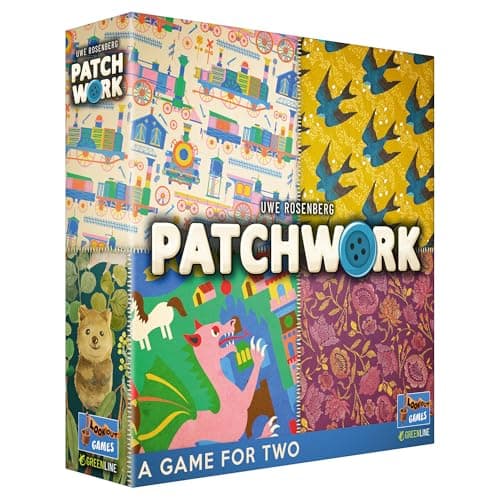
A two-player-only tile-laying game. You buy fabric patches on a shared time track and fit them onto a personal 9x9 quilt board, paying with buttons and with time.
Players
2
Playing time
about 30 minutes
Age
8+
Designer
Uwe Rosenberg
Publisher
Lookout Games
Published
2014
Who should skip it
Skip it if you want to interact. You are mostly solving your own board, and the only contact is who takes which patch first.
Yes. Plan B Games publishes it for 2-4, and two is arguably the sharpest way to play it: with one opponent you can read exactly what they will be forced to take next, so every draft is a readable two-sided decision. The trade-off is a shorter draft with less chaos than a four-player game.
+−Can you play Azul with 2 players?
Yes, with no house rules required. The publisher states 2-4 players, and the setup scales the shared tile supply with the player count so that tiles stay scarce at two. The exact two-player setup is printed in the rulebook in the box.
+−Is Azul or Azul Duel better for two players?
Azul Duel, if two players is all you will ever play. Next Move Games built it for exactly 2 and its draft makes you choose the order your leftover tiles are stacked for your opponent, which only works with one other person. Buy the original Azul instead if you need it to seat four, want the gentler teach, or want the Spiel des Jahres winner.
+−How many factories do you use in a 2-player game of Azul?
Azul scales the number of factory displays with the player count, and the two-player figure is printed in the rulebook. We do not state a number here because no source we can reach gives the per-player-count setup, and we do not publish specifications we cannot cite.
+−Is Azul a two-player-only game?
No. Plan B Games lists 2-4 players, so on this site Azul is labeled Plays at two rather than Built for two. Azul Duel, published by Next Move Games in 2025, is the two-player-only game in the family.
+−Does Azul have a solo mode?
No solo mode is stated by the publisher for either Azul or Azul Duel. Of the games we cover, only Gloomhaven: Jaws of the Lion has a publisher-stated minimum of one player.
+−Is Azul too simple for two adults?
No. The rules are light but the advanced placement mode -- where you may place colors anywhere on your board rather than in fixed positions -- is a genuinely different and much harder game, and it is the version worth learning for a pair who will play more than twice.